
Stenaspis verticalis
Audinet-Serville, 1834
Species Guides
2- Stenaspis verticalis arizonicus
- Stenaspis verticalis insignis(Red-headed Beauty)
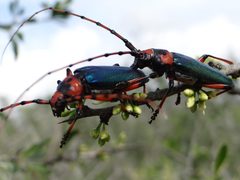
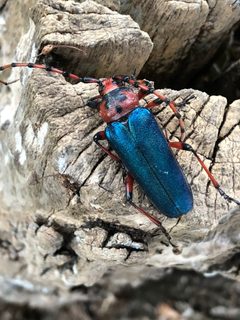
Stenaspis verticalis is a of longhorn beetle in the Cerambycidae, described by Audinet-Serville in 1834. It belongs to the tribe Trachyderini, a group known for robust, often strikingly patterned beetles. Field observations indicate this species is closely associated with Baccharis sarothroides (desert broom), on which have been found resting and mating. The species occurs in the southwestern United States and Mexico, with documented records from Arizona and potentially extending into Central America.
Pronunciation
How to pronounce Stenaspis verticalis: /stɛˈnæspɪs vɜːˈtɪkəlɪs/
These audio files are automatically generated. While they are not always 100% accurate, they are a good starting point.
Identification
Can be distinguished from the congeneric Stenaspis solitaria by subtle differences in antennal structure and body proportions; S. verticalis has been observed in mating pairs on Baccharis sarothroides stems, whereas S. solitaria is more frequently encountered singly on foliage of the same plant. The specific epithet "verticalis" likely refers to some aspect of body orientation or elytral markings, though original description details are not provided in available sources.
Images
Habitat
Arid and semi-arid regions including desert grasslands, desert scrub, and oak-juniper woodlands in the "Sky Islands" region of southeastern Arizona. Specifically associated with Baccharis sarothroides (desert broom) stands growing in grassy areas and along washes. Collected at elevations ranging from lower canyon areas to approximately 7000 feet in montane .
Distribution
North America: documented from Arizona (Santa Rita Mountains, specifically Madera Canyon area; also vicinity of Continental). Middle America: Guatemala and Honduras records present in GBIF. The likely occurs more broadly in the southwestern United States and northern Mexico, though precise range boundaries require further documentation.
Seasonality
active during summer monsoon season; documented observations from late July through early August. Activity appears to peak during hot, humid conditions typical of the Arizona monsoon period.
Host Associations
- Baccharis sarothroides - /oviposition site found resting on foliage and mating on stems; likely larval given cerambycid
Life Cycle
Complete (, larva, pupa, ) typical of Cerambycidae. Larvae presumably develop in woody stems of plant Baccharis sarothroides, though direct observation of stages not documented in available sources. Adults emerge during summer rainy season.
Behavior
are and have been observed in mating pairs on plant stems. When disturbed, individuals may remain motionless or attempt to escape by crawling deeper into vegetation. Not attracted to ultraviolet light traps based on available collecting records.
Ecological Role
Larval wood-borer in living or recently dead stems of Baccharis sarothroides; contributes to nutrient cycling in desert scrub . pollination role unknown but may incidentally visit flowers.
Human Relevance
Of interest to coleopterists and natural history collectors due to relative rarity and specific requirements. Not known to be of economic importance.
Similar Taxa
- Stenaspis solitariaCongeneric frequently found on same plant (Baccharis sarothroides, Acacia rigidula); distinguished by antennal structure and behavioral differences—S. solitaria more commonly encountered singly on foliage, S. verticalis in mating pairs on stems
- Trachyderes mandibularisSympatric trachyderine cerambycid found in similar Arizona ; distinguished by prominent in males and different associations (Acacia, Baccharis)
- Dendrobias mandibularisCo-occurs on Baccharis sarothroides in Arizona; larger size, different body proportions, and distinctive mandibular armature distinguish this
More Details
Taxonomic Note
The Stenaspis verticalis arizonensis has been recognized based on Arizona , though formal description details are not provided in available sources. The nominate form occurs further south.
Collecting Significance
Considered a 'highly desirable' by collectors; Ted MacRae noted it as 'one of my top priority targets' during 2018 Arizona expedition. Successful collection required intensive search of Baccharis sarothroides stands in lower Madera Canyon on final day of 7-day collecting trip.
Discovery Context
First documented collection during 2018 expedition involved locating mating pair on Baccharis sarothroides stem after observing single Stenaspis solitaria on same plant; subsequent search yielded three mating pairs and additional individuals in same grassy area northwest of parking lot.