
Smodicum pacificum
Linsley, 1934
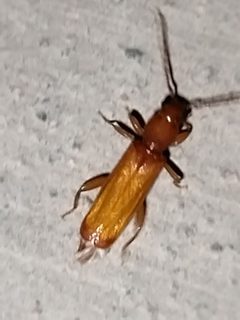
Smodicum pacificum is a of longhorn beetle ( Cerambycidae) described by Linsley in 1934. It belongs to the tribe Smodicini within the Cerambycinae. The species has been recorded from North America and Middle America, with specific distribution including Mexico and the United States. Very few observations exist in public databases, suggesting it is rarely encountered or understudied.
Pronunciation
How to pronounce Smodicum pacificum: /ˈsmoʊ.dɪ.kəm pəˈsɪ.fɪ.kəm/
These audio files are automatically generated. While they are not always 100% accurate, they are a good starting point.
Identification
Members of the Smodicum are small to medium-sized cerambycids with somewhat flattened, parallel-sided bodies. Smodicum pacificum would be distinguished from by subtle morphological features such as antennal proportions, elytral punctation patterns, and body proportions, though specific diagnostic characters for this are not well documented in accessible literature. The genus is characterized by relatively short compared to many cerambycids and a somewhat cucujiform (flattened, elongate) body shape.
Images
Distribution
Recorded from Middle America and North America, specifically Mexico (MX) and the United States (US). Precise locality details beyond country-level records are not well documented.
Similar Taxa
- Smodicum cucujiformeCongeneric with similar overall body form; S. pacificum is distinguished by geographic distribution and subtle morphological differences established in the original description.
More Details
Taxonomic history
The was described by E. Gorton Linsley in 1934, a prominent American coleopterist who made extensive contributions to the of North American Cerambycidae. The specific epithet 'pacificum' likely refers to the Pacific region of North America, though the precise type locality requires verification from the original description.
Data scarcity
As of current records, iNaturalist reports only 4 observations of this , indicating it is either genuinely rare, difficult to detect, restricted to specific , or simply understudied. This low observation count contrasts with the more frequently encountered Smodicum cucujiforme, which has been documented in trapping studies in Oklahoma.