
Clytus clitellarius
(Van Dyke, 1920)
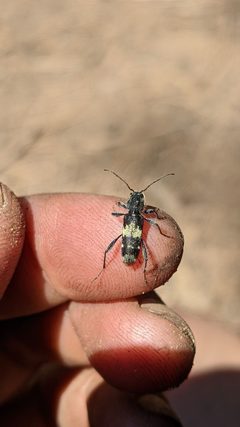
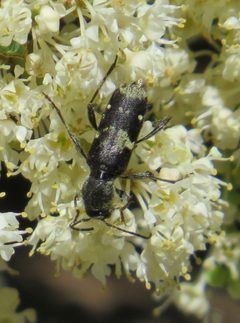
Clytus clitellarius is a of longhorn beetle in the Cerambycidae, described by Van Dyke in 1920. It belongs to the tribe Clytini, a group known for -mimicking coloration patterns. The species is native to North America, with records from the United States. Like other members of the Clytus, it likely exhibits of wasps or bees as a defensive .
Pronunciation
How to pronounce Clytus clitellarius: //ˈklaɪtəs ˌklɪtɛˈlɛəriəs//
These audio files are automatically generated. While they are not always 100% accurate, they are a good starting point.
Identification
Members of the Clytus are recognized by their -like coloration, typically featuring yellow and black banded . Clytus clitellarius can be distinguished from similar by examining the pattern of yellow markings on the elytra and the relative length of the . Accurate identification to species level requires comparison with described specimens and may necessitate examination of genitalic structures or other subtle morphological features.
Images
Distribution
North America; United States
Similar Taxa
- Clytus ruricolaShares similar -mimicking coloration with yellow-banded ; distinguished by details of elytral pattern and antennal proportions
- Neoclytus spp.Related within Clytini with convergent -mimicry; differ in body proportions and specific markings
More Details
Taxonomic history
Described by E.C. Van Dyke in 1920, with the specific epithet 'clitellarius' of uncertain etymology. The remains poorly documented in the primary literature.
Data availability
As of current records, only 4 observations exist on iNaturalist, indicating this is a rarely encountered or underreported .