
Knulliana
Linsley, 1962
banded hickory borer
Species Guides
1- Knulliana cincta(Banded Hickory Borer)
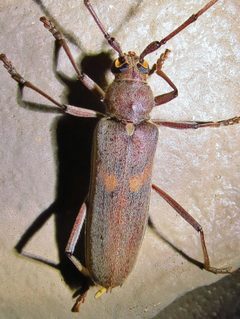
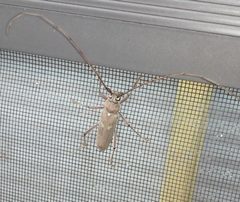
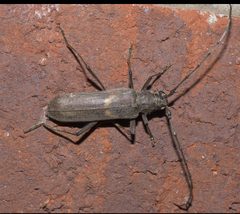
Knulliana is a of longhorn beetles ( Cerambycidae) containing the single Knulliana cincta, commonly known as the banded hickory borer. The genus was established by Linsley in 1962 and is classified within the tribe Bothriospilini. The sole species ranges across the eastern half of North America from Canada to the Bahamas and Mexico, with one extending into the Sonoran Desert. are associated with hickory and oak trees, where larvae develop as wood-borers.
Pronunciation
How to pronounce Knulliana: /nʌˈliːənə/
These audio files are automatically generated. While they are not always 100% accurate, they are a good starting point.
Identification
The is represented by a single , Knulliana cincta, which can be recognized by its robust body form, prominent spines on the and pronotum, and spined tips of the . range from 15–35 mm in length. The species exhibits three described with geographic variation in coloration: the nominate form in eastern North America, K. c. ochracea in the southeastern United States and Bahamas, and K. c. sonorensis in the southwestern United States and adjacent Mexico. When roughly handled, adults may produce audible squeaking sounds.
Images
Habitat
Associated with deciduous hardwood forests, particularly stands containing hickory (Carya spp.) and oak (Quercus spp.) trees. are found on tree trunks and branches. Larvae develop beneath bark and within wood of living or recently dead host trees.
Distribution
Eastern half of North America, from southern Canada through the eastern and central United States, extending south to northeastern Mexico and the Bahamas. One (K. c. sonorensis) occurs in the Sonoran Desert region from Texas to Arizona and adjacent Mexico.
Diet
have been observed on hickory and oak trees; specific adult feeding habits are not documented. Larvae feed beneath bark and bore into wood of trees during development.
Host Associations
- Carya - larval laid in bark crevices, larvae feed beneath bark and bore into wood
- Quercus - larval laid in bark crevices or directly into wood, larvae feed beneath bark and bore deeper into wood
Life Cycle
Females lay in bark crevices or directly into wood of trees. Larvae feed beneath bark during their first season, then bore deeper into wood in subsequent seasons. occurs within the wood. Developmental timing details and number of years required to complete the are not documented.
Behavior
may produce squeaking sounds when roughly handled. Larval feeding beneath bark and subsequent wood-boring can cause significant damage to trees.
Ecological Role
Larvae function as primary consumers of living hardwood tree tissues, potentially contributing to tree mortality or structural weakness. The represents a native wood-boring within eastern North American forest .
Human Relevance
Larvae sometimes cause significant damage to hickory and oak trees, potentially affecting timber quality or tree health. The has been documented in entomological surveys and trapping studies using ethanol-based baits.
Similar Taxa
- EburiaSimilar body form and spination; Knulliana specimens have been misidentified as Eburia in trap collections due to superficial resemblance, requiring close examination to distinguish
- MegacylleneBoth are robust cerambycines with spiny pronota; Megacyllene typically show distinct antennal patterns and different associations (often leguminous trees)