
Knulliana cincta
(Drury, 1773)
Banded Hickory Borer
Species Guides
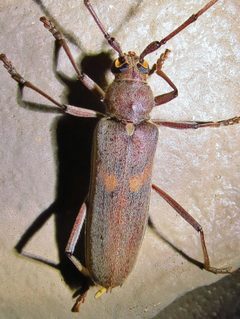
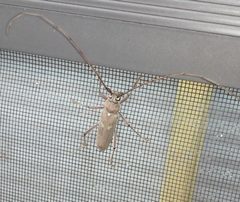
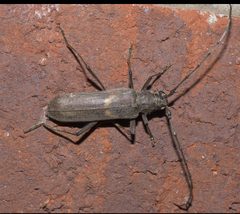
3Knulliana cincta, commonly known as the banded hickory borer, is a longhorn beetle and the sole in its . measure 15–30 mm and occur throughout the eastern half of North America, including Mexico and the Bahamas, with one extending to the Sonoran Desert. The species is primarily associated with hickory and oak trees, where larvae bore into the wood. Adults may emit a squeaking sound when roughly handled.
Pronunciation
How to pronounce Knulliana cincta: /nʌˈliːɑːnə ˈsɪŋktə/
These audio files are automatically generated. While they are not always 100% accurate, they are a good starting point.
Identification
Distinguished from other cerambycids by its banded elytral pattern and association with hickory and oak . The Knulliana is , so specimens can be identified to genus level by the unique combination of morphological features that define this . may be confused with other large cerambycines, but the specific host association and geographic range help narrow identification.
Images
Appearance
are 15–30 mm in length. The body is elongate and cylindrical, typical of longhorn beetles. Coloration includes banded patterns on the . The are long, characteristic of the Cerambycidae.
Habitat
Deciduous forests and woodlands dominated by hickory (Carya) and oak (Quercus) . are found on tree trunks and branches.
Distribution
Eastern half of North America, from Canada through the United States to Mexico and the Bahamas. One extends into the Sonoran Desert.
Diet
Larvae bore into and feed on the wood of hickory and oak trees. do not feed on wood; specific adult feeding habits are not well documented but likely include nectar or other plant fluids.
Host Associations
- Carya - larval hickory trees
- Quercus - larval oak trees
Life Cycle
Females lay on bark of trees. Larvae tunnel beneath bark and bore into wood, feeding and developing for an extended period. occurs within the wood. emerge and are active during warmer months. Specific timing of varies by latitude.
Behavior
may squeak furiously when roughly handled—a defensive . They are and found on tree trunks. Larvae are wood-borers, creating galleries in heartwood.
Ecological Role
Larvae act as primary decomposers of dead and dying hardwood trees, contributing to nutrient cycling in forest . Their boring activity creates for other organisms in decaying wood.
Human Relevance
Considered a minor pest of hickory and oak in forestry and urban settings. Damage is typically limited to already stressed, dying, or dead trees rather than healthy specimens. The has no significant economic impact compared to more aggressive forest pests.
Similar Taxa
- Other large cerambycine beetles in BothriospiliniSimilar body form and size, but distinguished by specific elytral patterning and associations
More Details
Taxonomic history
The was originally described by Drury in 1773 and is the only species in the Knulliana, making it taxonomically unique among North American cerambycids.
Defensive sound production
The squeaking when handled is produced by stridulation and serves as an anti- defense.