
Dubiraphia
Sanderson, 1954
riffle beetles
Species Guides
10- Dubiraphia bivittata
- Dubiraphia brevipennis
- Dubiraphia browni
- Dubiraphia brunnescens(Brownish Dubiraphian Riffle Beetle)
- Dubiraphia giulianii(Giuliani's Dubiraphian Riffle Beetle)
- Dubiraphia harleyi
- Dubiraphia minima(riffle beetle)
- Dubiraphia parva(little dubiraphian riffle beetle)
- Dubiraphia quadrinotata(riffle beetle)
Dubiraphia is a of riffle beetles in the Elmidae, established by Sanderson in 1954. The genus contains approximately 11 described distributed in North America. These beetles are aquatic or semi-aquatic, inhabiting flowing water environments. Species within Dubiraphia are distinguished by morphological features of the and male genitalia.
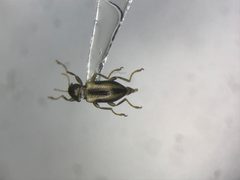
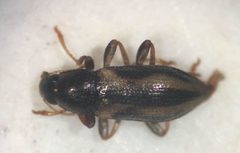
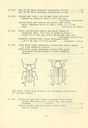
Pronunciation
How to pronounce Dubiraphia: /djuːbɪˈreɪfiə/
These audio files are automatically generated. While they are not always 100% accurate, they are a good starting point.
Identification
Dubiraphia are distinguished from other elmine primarily by characters of the male genitalia and elytral pattern. The genus was revised by Hilsenhoff (1973), who provided diagnostic features separating it from closely related genera. Specific species identifications rely on examination of aedeagal structure and elytral coloration patterns, including the presence or absence of vittae (stripes) and spots.
Images
Habitat
of Dubiraphia inhabit lotic environments, specifically riffle zones of streams and rivers. These beetles require well-oxygenated, flowing water with rocky or gravel substrates. They are typically found clinging to submerged stones and debris in moderate to fast currents.
Distribution
The is to North America. occur across the United States and southern Canada, with individual species showing varying regional distributions. Records span from the eastern seaboard westward to the Great Plains and Rocky Mountain regions.
Behavior
are strongly associated with aquatic and are capable of remaining submerged due to respiration—air held by hydrofuge hairs on the body surface that enables underwater. Adults are active swimmers and clingers, using their legs to maintain position in flowing water.
Ecological Role
As members of the Elmidae, Dubiraphia contribute to nutrient cycling in freshwater through processing of allochthonous organic matter. They serve as prey for fish and other aquatic . Their presence indicates good water quality, as riffle beetles are sensitive to pollution and degradation.
Human Relevance
Dubiraphia are used as bioindicators of stream health in biomonitoring programs. Their sensitivity to water quality changes makes them valuable for assessing integrity. They are not of direct economic importance to agriculture or forestry.
Similar Taxa
- MacronychusAnother elmine with similar and preferences; distinguished by differences in male genitalia and tarsal structure.
- StenelmisLarger elmine with overlapping distribution; Stenelmis generally differ in body form and elytral .
- OptioservusFormerly included now placed in Optioservus; Dubiraphia distinguished by specific genitalic and external morphological characters established in Hilsenhoff's revision.
More Details
Taxonomic History
The was revised comprehensively by Hilsenhoff (1973), who described six new and provided keys to all known species. Several species were transferred from other genera during this revision, clarifying the generic limits.
Etymology
The name is an anagram of 'Elaphidibia', a related genus from which some were transferred.