
Elminae
Curtis, 1830
riffle beetles
Genus Guides
3- Ancyronyx(spider water beetles)
- Elmini(riffle beetles)
- Macronychini(riffle beetles)
Elminae is a of riffle beetles ( Elmidae) comprising at least 120 and over 1,300 described . Members are primarily aquatic, inhabiting running water across all major biogeographic regions. The subfamily exhibits considerable morphological diversity, with some genera showing pronounced secondary and miniaturization traits.
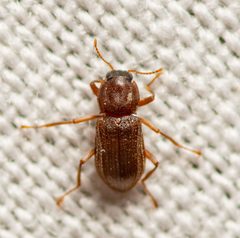
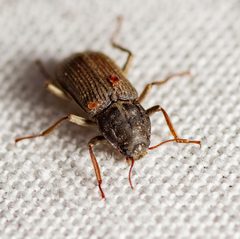
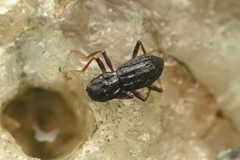
Pronunciation
How to pronounce Elminae: //ˈɛl.mɪ.neɪ//
These audio files are automatically generated. While they are not always 100% accurate, they are a good starting point.
Images
Habitat
Running water systems including streams and rivers; specific microhabitats include riffles, sandy stream bottoms, and areas with moderate current. Some inhabit small sandy streams (2–3 m width) with clear water in tropical rainforest settings with dense cover.
Distribution
distribution spanning Afrotropical, Neotropical, and other major biogeographic regions. Documented from French Guiana, Suriname, Peru, Venezuela, Brazil (Rio de Janeiro, Minas Gerais, São Paulo states), and various Afrotropical localities.
Life Cycle
Larvae aquatic, found in sandy substrates of streams; also aquatic. Specific developmental details vary by and .
Ecological Role
Members have been observed in pristine forest streams and are generally considered indicators of good water quality in freshwater systems.
More Details
Taxonomic diversity
The contains at least 120 with considerable variability in several genera; revisionary work is recommended to assess monophyly of variable .
Miniaturization
Some Elminae exhibit extreme miniaturization (ca. 1.0–1.2 mm), with associated traits including reduced tarsal formula and feathery wings with reduced venation.
Secondary sexual dimorphism
Pronounced secondary has been documented in some , with males possessing modified protarsal and mesotarsal claws, spines on the , and ventrally directed processes on the metaventrite.
Sources and further reading
- BugGuide
- Wikipedia
- iNaturalist taxon
- NCBI Taxonomy
- Catalogue of Life
- Elachistelmis gen. n. (Coleoptera: Elmidae: Elminae) from Suriname, with description of two new species
- Generic review and key to all Afrotropical genera of the subfamily Elminae (Coleoptera: Elmidae)
- Amazonopsis cerdani (Coleoptera: Elmidae: Elminae), a New Species of Riffle Beetle from French Guiana with Habitat Observations
- Amazonopsis, an unusual new genus of riffle beetle from South America with two new species (Coleoptera, Elmidae, Elminae)
- Three new species of Macrelmis Motschulsky (Coleoptera: Elmidae: Elminae) from Southeastern Brazil with new definition of species groups to the genus