Acmaeodera solitaria
Kerremans, 1897
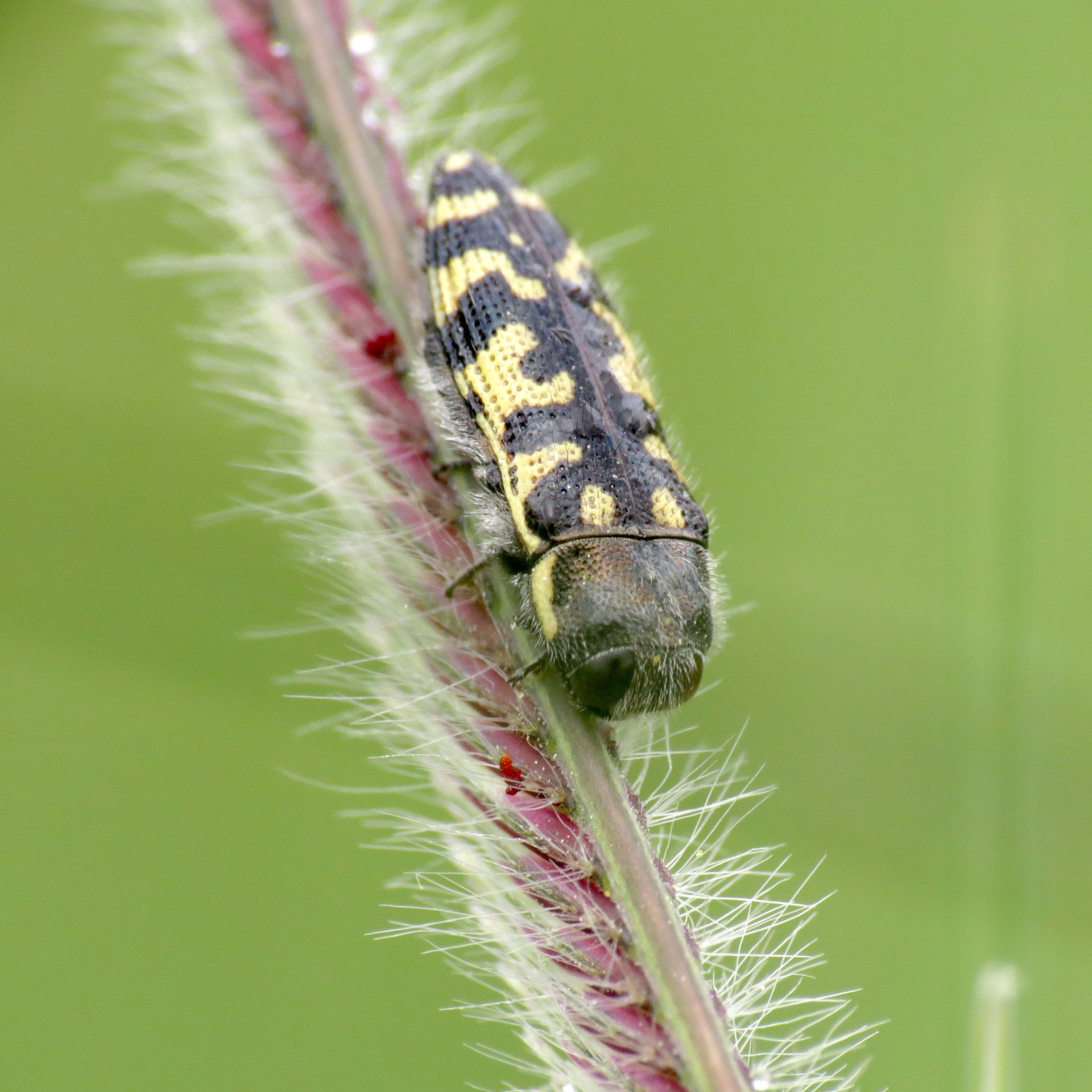
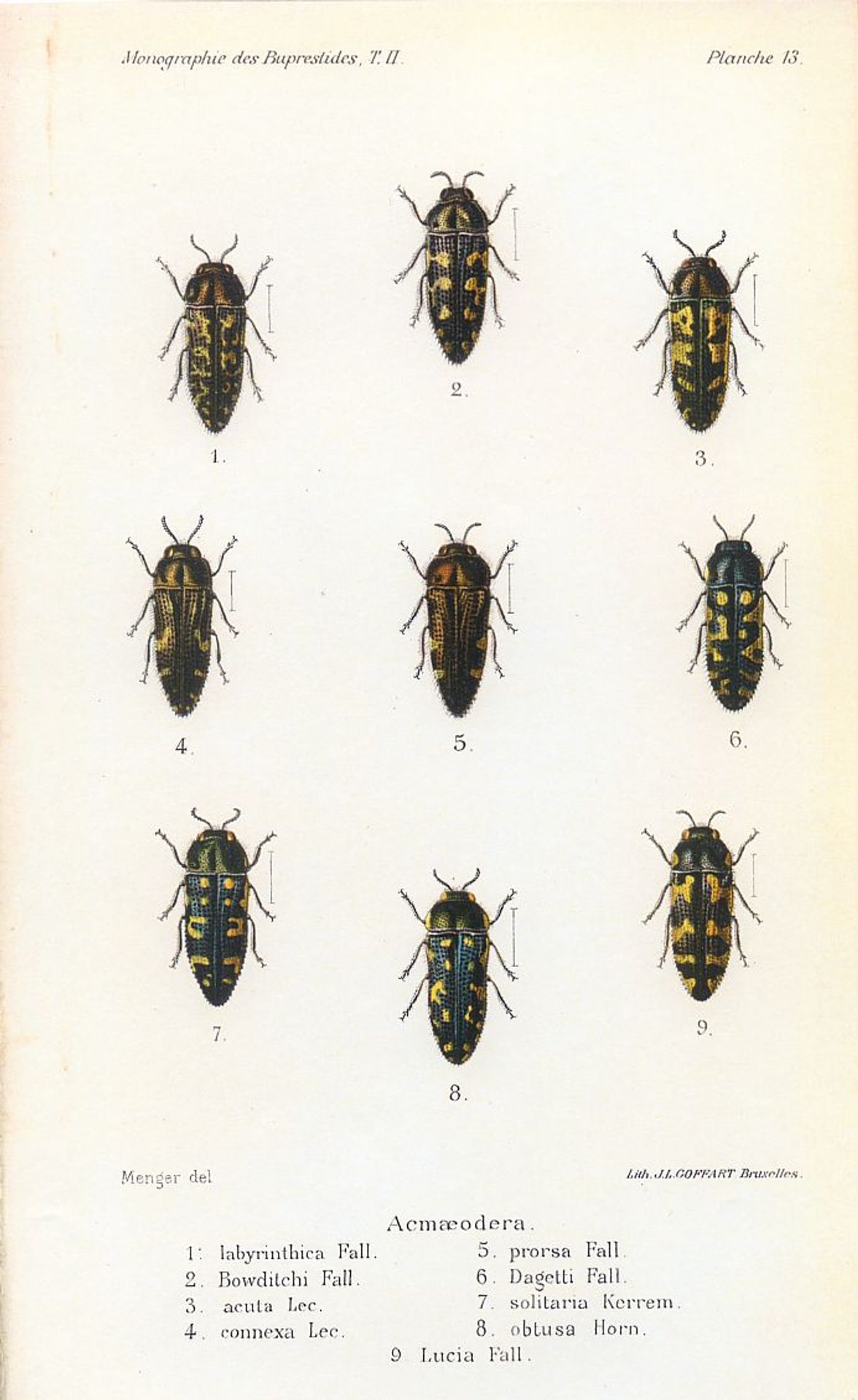
Acmaeodera solitaria is a of metallic wood-boring beetle in the Buprestidae. It occurs in the southwestern United States and Mexico, where it has been collected from flowers of yellow-flowered composites and prickly poppy. are active during summer months, particularly July and August. The species was described by Kerremans in 1897.
Pronunciation
How to pronounce Acmaeodera solitaria: /ækmɪˈoʊdərə ˌsɒlɪˈtɛəriə/
These audio files are automatically generated. While they are not always 100% accurate, they are a good starting point.
Identification
A small to medium-sized Acmaeodera with metallic coloration. Specific diagnostic features distinguishing it from are not documented in available sources. Collection records indicate it occurs sympatrically with A. cazieri, A. rubronotata, and A. gibbula in Arizona.
Images
Habitat
Arid and semi-arid regions including desert flats, canyon areas, and grasslands. Associated with flowering vegetation in open, sunny .
Distribution
Southwestern United States (Arizona, New Mexico, Texas, Oklahoma) and Mexico. Documented from the Chiricahua Mountains, Santa Rita Mountains, and Huachuca Mountains in Arizona, as well as the Wichita Mountains in Oklahoma.
Seasonality
active July through August, with peak activity during summer monsoon season.
Host Associations
- Argemone mexicana - flower visitationcollected on prickly poppy flowers
- Helianthus sp. - flower visitationcollected on yellow-flowered composites
- Heterotheca sp. - flower visitationcollected on flowers
- Heliomeris longifolia - flower visitationcollected on flowers
- Baccharis sarothroides - sweeping substratecollected by sweeping vegetation
Behavior
have been observed visiting flowers of yellow-flowered composites and prickly poppy. Collected by sweeping low vegetation and beating flowers.
Ecological Role
Flower visitor; likely contributes to pollination of plants. Larval unknown, but typically develop in dead or dying wood.
Similar Taxa
- Acmaeodera cazieriSympatric in Arizona; both occur on yellow-flowered composites and Acacia
- Acmaeodera rubronotataCollected together on roadside yellow composites in Arizona
- Acmaeodera gibbulaSimilar size and preference; occurs on Acacia and Prosopis in same region