
Acmaeodera gibbula
LeConte, 1858
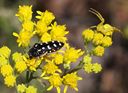
Acmaeodera gibbula is a metallic wood-boring beetle in the Buprestidae, first described by LeConte in 1858. The exhibits the characteristic jewel beetle with metallic coloration. It has been documented in the southwestern United States and Mexico, with field observations from Arizona and surrounding regions. have been collected from flowers of various plants including Acacia species and yellow-flowered composites.
Pronunciation
How to pronounce Acmaeodera gibbula: /ˌæk.miː.oʊˈdɛrə ˈɡɪbjʊlə/
These audio files are automatically generated. While they are not always 100% accurate, they are a good starting point.
Images
Habitat
Desert and semi-arid regions of the southwestern United States and adjacent Mexico. Field observations indicate association with desert scrub vegetation including mesquite (Prosopis glandulosa), sweet acacia (Acacia rigidula), and joint-fir (Ephedra trifurca). have been found on flowering plants in desert flats and canyon areas.
Distribution
Central America and North America. Documented from the southwestern United States (Arizona) and Mexico. GBIF records indicate presence in the Nearctic and Neotropic regions.
Seasonality
activity has been observed during summer months, with field records from July and August in Arizona. Activity appears to coincide with summer monsoon season and flowering of plants.
Host Associations
- Acacia greggii - feeding/Mating pairs observed on this
- Acacia rigida - occurrenceCollected from this in desert flats
- Prosopis glandulosa - occurrenceFound in association with mesquite vegetation
- Heterotheca subaxillaris - feedingObserved on flowers
- Hymenothrix wislizeni - feedingCollected from flowers
Behavior
are and have been observed flying to flowers. They exhibit aggregative on plants, with multiple individuals found on single plants. Mating pairs have been documented on Acacia greggii. Adults are active during daylight hours and appear to be attracted to yellow-flowered composites.
Similar Taxa
- Acmaeodera cazieriSympatric in Arizona; both found on Acacia and yellow-flowered composites. A. gibbula can be distinguished by its more robust, gibbous body form.
- Acmaeodera rubronotataOccurs in same and on similar flowers; differs in color pattern and body proportions.
More Details
Etymology
The specific epithet 'gibbula' refers to the humped or gibbous body shape characteristic of this .