
Texania
Casey, 1909
Species Guides
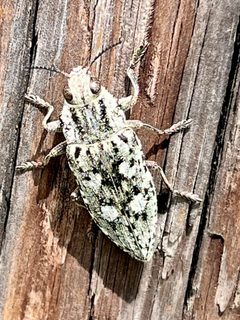
3- Texania campestris(Hardwood Heartwood Buprestid)
- Texania fulleri
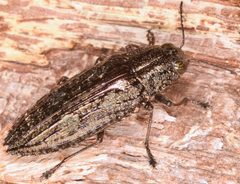
- Texania langeri(metallic wood-boring beetle)
Texania is a of jewel beetles ( Buprestidae) in the tribe Chrysochroini, commonly known as metallic woodboring beetles. The genus contains at least three recognized in North America: T. campestris, T. fulleri, and T. langeri. Members of this genus are part of the 'Texania generic group' within the subtribe Chalcophorina. Texania campestris has been documented as a for predatory fly larvae in the family Mydidae.
Pronunciation
How to pronounce Texania: //tɛkˈseɪ.ni.ə//
These audio files are automatically generated. While they are not always 100% accurate, they are a good starting point.
Identification
Texania can be distinguished from other North American Chrysochroini such as Chalcophora, Lampetis, and Dicerca by their placement in the Texania generic group sensu Volkovitsh 2001. Specific diagnostic features for the genus are not documented in available sources.
Images
Distribution
North America. The includes with distributions in the United States: Texania campestris (described by Say in 1823), Texania fulleri (described by Horn in 1875), and Texania langeri (described by Chevrolat in 1853).
Host Associations
- Mydus clavatus - preyLarvae of Mydus clavatus (Mydidae) have been reared from dead sycamore stumps infested with mature larvae of Texania campestris
Life Cycle
Larvae are wood-boring, as evidenced by records of mature larvae found in dead sycamore (Platanus occidentalis) stumps.
Ecological Role
As wood-boring larvae, Texania contribute to wood decomposition processes. They serve as prey for specialized including mydid fly larvae.
Similar Taxa
- ChalcophoraBoth are North American in tribe Chrysochroini, but belong to different generic groups; Chalcophora is one of the most familiar North American chrysochroine genera alongside Texania
- LampetisAnother familiar North American in tribe Chrysochroini, distinguished from Texania by generic group placement
- DicercaNorth American in tribe Chrysochroini, part of the Dicerca generic group rather than the Texania generic group
More Details
Taxonomic placement
Texania is placed in the Texania generic group sensu Volkovitsh 2001, within the subtribe Chalcophorina of tribe Chrysochroini. The was established by Casey in 1909.
Collection records
Specimens of Texania langeri have been documented in entomological collections, including records in the TCMC (T.C. MacRae Collection) Buprestoidea inventory.