
Texania fulleri
(Horn, 1875)
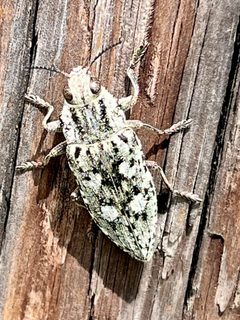
Texania fulleri is a of metallic wood-boring beetle in the Buprestidae. The species is known from North America, with confirmed records from western Texas. Larvae have been documented developing in the sapwood of dead Celtis laevigata (sugarberry). likely emerge from wood, though specific adult activity patterns remain poorly documented.
Pronunciation
How to pronounce Texania fulleri: /tɛkˈseɪ.niə ˈfʊl.ə.ri/
These audio files are automatically generated. While they are not always 100% accurate, they are a good starting point.
Identification
Texania fulleri can be distinguished from other Texania by its specific association with Celtis laevigata as a larval . The Texania belongs to the tribe Chrysobothrini and is characterized by metallic coloration typical of Buprestidae. Accurate identification to species level typically requires examination of specimens by a , as external morphological differences between Texania species can be subtle.
Images
Habitat
Associated with riparian or woodland where Celtis laevigata (sugarberry) occurs. Larval habitat consists of dead or dying wood of this tree, specifically in trunk sapwood. The documented locality in western Texas suggests xeric to semi-arid woodland environments.
Distribution
North America. Confirmed records from Val Verde County, Texas, USA. The likely occurs more broadly in the southwestern United States where suitable plants exist, though specific distribution records remain sparse.
Diet
Larvae feed in the sapwood of dead Celtis laevigata (sugarberry). feeding habits have not been documented.
Host Associations
- Celtis laevigata - larval larvae develop in trunk sapwood of dead trees
Life Cycle
Larvae are wood-borers in the sapwood of dead trees. A larva in a "pre-pupal fold" has been observed in April, suggesting may emerge in spring or early summer, though specific timing is not well documented.
Behavior
Larvae create galleries in the sapwood of dead branches and trunks. No specific have been documented.
Ecological Role
As a wood-boring , larvae contribute to the decomposition of dead Celtis laevigata wood, facilitating nutrient cycling in woodland . The is a primary consumer of dead wood and likely serves as prey for woodpeckers and other .
Human Relevance
Minor relevance as a forestry pest. The develops in already dead or dying trees rather than attacking healthy wood. May be encountered by entomologists collecting infested wood for rearing purposes.
Similar Taxa
- Texania speciesOther in the Texania share similar and wood-boring larval habits; identification requires examination
- Polycesta speciesAnother of Buprestidae with larvae in dead wood; may occur in similar and
More Details
Rearing records
A larva provisionally identified as Texania fulleri was collected from Celtis laevigata in Val Verde County, Texas in late April 2021. The larva was in a pre-pupal fold within the trunk sapwood, suggesting imminent .
Taxonomic note
The Texania is placed in the tribe Chrysobothrini within the Buprestinae. -level identification in this genus can be challenging and may require examination of genitalia or other subtle morphological characters.