
Polycesta
Dejean, 1833
jewel beetles
Species Guides
10- Polycesta arizonica(Sky Island Polycesta)
- Polycesta aruensis(Desert-dwelling Polycesta)
- Polycesta californica
- Polycesta crypta
- Polycesta cyanea
- Polycesta elata(Southern Plains Polycesta)
- Polycesta flavomaculata
- Polycesta goryi
- Polycesta hageni
Polycesta is a of jewel beetles ( Buprestidae) in the Polycestinae, tribe Polycestini. The genus contains approximately 60 described distributed across North America, the Neotropics, and parts of the Palearctic region. Several species have been documented breeding in dead wood of various plants, particularly in oak and mesquite . The genus was established by Dejean in 1833 and includes notable species such as P. arizonica, P. californica, and P. cazieri, the latter having been reared from Cercocarpus (mountain mahogany).
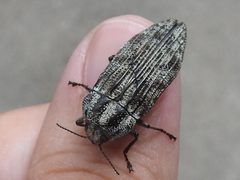
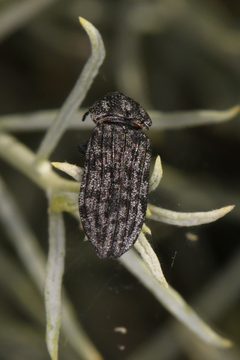
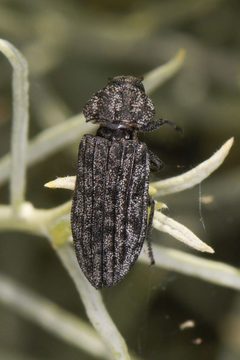
Pronunciation
How to pronounce Polycesta: //pɒlɪˈsɛstə//
These audio files are automatically generated. While they are not always 100% accurate, they are a good starting point.
Images
Habitat
in this have been collected from oak woodlands, mesquite scrub, and riparian corridors. Specific records include dead branches of Quercus (oak), Celtis (hackberry), and Cercocarpus (mountain mahogany). The beetles are associated with recently dead or dying woody vegetation rather than living plant tissue.
Distribution
The occurs in North America (southwestern United States including Arizona, California, Texas, and New Mexico), Mexico, Central America, the Caribbean, and extends into South America. Disjunct records exist from the Palearctic region including Iran, Afghanistan, and parts of Asia.
Seasonality
activity has been documented from spring through summer, with specific records indicating presence in April through July. Peak appears to vary by and locality, with some species showing synchronized emergence events.
Host Associations
- Quercus - breedingdead branches
- Celtis - breedingdead branches
- Cercocarpus - breedingdead branches, confirmed for P. cazieri
- Prosopis - occurrence observed on living mesquite
Life Cycle
Larval development occurs in dead wood of plants. emerge from holes in trunks and branches. One (P. aruensis) has been documented with synchronized emergence from partially dead trees.
Behavior
have been observed on flowers and foliage of plants. Some appear to be or have brief, synchronized periods. Adults are capable of rapid and will dodge to the backside of branches when disturbed.
Ecological Role
As wood-boring beetles, larvae contribute to decomposition of dead woody material in forest and scrub . The represents part of the diverse buprestid fauna specializing on dead branches within living trees.
Human Relevance
Of interest to coleopterists and collectors due to the metallic coloration typical of buprestids. Some are sought after for collections, with exchange of specimens documented among . No known economic importance as pests or beneficial species.
Similar Taxa
- AcmaeoderaSimilar size and metallic coloration; distinguished by antennal structure and elytral sculpturing patterns
- ChrysobothrisOverlapping use in dead wood; Chrysobothris typically has more pronounced elytral punctation and different antennal proportions
More Details
Subgeneric classification
The includes several subgenera: Polycesta (s. str.), Arizonica (established by Cobos 1981), and Tularensia (established by Nelson 1997). The subgenus Tularensia includes P. californica, P. cazieri, and P. crypta.
Collection history
Specimens have been obtained through beating dead branches, rearing from cut wood, and occasional sweep netting. The 1992 World Buprestid Gathering in Mexico collected P. cortezii from high branches of a large dead tree in Cañón del Zopilote, Guerrero.