
Polycesta elata
LeConte, 1858
Southern Plains Polycesta
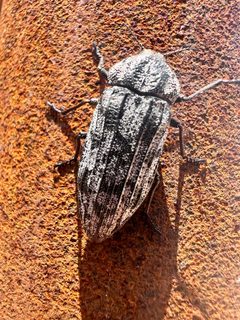
Polycesta elata is a metallic wood-boring beetle in the Buprestidae. It is native to North America, with records from Texas and surrounding regions. The develops in dead or dying hardwoods, particularly sycamore (Platanus occidentalis). are attracted to ultraviolet light.
Pronunciation
How to pronounce Polycesta elata: /ˌpɔːlɪˈsɛstə ɛˈlɑːtə/
These audio files are automatically generated. While they are not always 100% accurate, they are a good starting point.
Images
Habitat
Associated with riparian and woodland where trees occur. Larvae develop in dead or declining hardwood trees and branches.
Distribution
North America; recorded from Texas and adjacent regions in the southern United States.
Seasonality
have been collected in late April through May in Texas.
Diet
Larvae feed on dead or dying wood of hardwood trees, particularly Platanus occidentalis (American sycamore). feeding habits are not documented.
Host Associations
- Platanus occidentalis - larval Reared from dead branches and trunks with holes; larval galleries present in sapwood
Life Cycle
Larvae are wood-borers in dead or dying hardwood branches and trunks. occurs within the wood. emerge through distinct exit holes.
Behavior
are and attracted to ultraviolet light. Larvae tunnel in sapwood of dead or declining trees.
Ecological Role
Contributes to decomposition of dead hardwood wood in riparian and woodland .
Human Relevance
Collected by entomologists for study and documentation. No significant economic impact documented.
More Details
Collection history
The was among those noted by Ted C. MacRae during a 1990s collecting trip to Garner State Park, Texas, and was successfully reared from infested Platanus occidentalis wood collected near the Devils River in 2021.