
Trachys
Fabricius, 1801
Leaf-mining Jewel Beetles
Species Guides
2- Trachys minutus(elm leaf miner)
- Trachys troglodytiformis
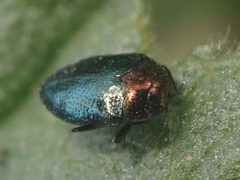
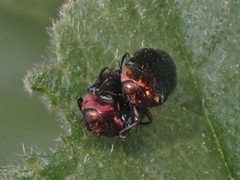
Trachys is a of leaf-mining jewel beetles (Buprestidae: Trachyinae) characterized by their flattened, compact, wedge-shaped —an distinct from the elongate cylindrical form typical of most buprestids. The genus contains approximately 20 in Japan and is widely distributed from Africa through Asia to Europe. Larvae mine within leaves rather than boring through wood, a habit that has driven their distinctive body plan. Some species are significant forest and agricultural pests, including the introduced Trachys minutus established in Massachusetts and T. yanoi, a serious pest of Zelkova serrata in East Asia.
Pronunciation
How to pronounce Trachys: /ˈtræk.ɪs/
These audio files are automatically generated. While they are not always 100% accurate, they are a good starting point.
Identification
distinguished from other buprestid by their highly derived, flattened, compact, wedge-shaped body form—markedly different from the elongate, cylindrical shape typical of most jewel beetles. This reflects their unique larval habit of leaf mining rather than wood boring. Within the tribe Trachyini, Trachys can be separated from the North American genus Brachys and the sedge-associated Taphrocerus by geographic distribution (Old World vs. New World for the latter two) and associations. Specific -level identification requires examination of patterns, coloration, and genitalia.
Images
Habitat
Associated with broadleaf forests and wooded areas supporting their plants. of at least some overwinter under partially peeled bark of host trees at heights of 2–15.5 m, showing preference for lower trunk heights and western or southwestern cardinal directions. The introduced Trachys minutus has established in Massachusetts, indicating adaptability to temperate deciduous forest conditions outside its native range.
Distribution
Widely distributed from Africa through Asia to Europe. In Asia, 20 recorded from Japan, with additional records from Korea, China, and South India. In Europe, T. troglodytes occurs in Denmark and Scandinavia. The Palearctic species T. minutus has been introduced and established in North America (Massachusetts, USA).
Seasonality
of T. yanoi emerge from under bark in April, with oviposition occurring May to early June; new adults eclose July–September and overwinter from October. Seasonality of other poorly documented, but likely synchronized with leaf flush of plants.
Diet
feed on leaves of plants. Larvae are leaf miners that feed internally on leaf tissues.
Host Associations
- Zelkova serrata - primary leaves mined by larvae and fed upon by ; primary of T. yanoi
- Barleria cristata - of Trachys sp. near virescens in South India
Life Cycle
T. yanoi has a documented 1-year : overwinter under bark, emerge in April, feed and mate on leaves; females lay ~49 singly on leaf surfaces May–early June; eggs hatch after ~17 days; larvae develop through three instars inside leaves (June–July); early leaf abscission occurs in July with leaves containing final-instar larvae falling to ground; larvae pupate 4 days after abscission; adults eclose 7 days after , emerge from leaves after 2 more days; new adults feed on remaining leaves before under bark in October. Life cycles of other assumed similar but not confirmed.
Behavior
Early leaf abscission is a critical behavioral in T. yanoi: leaves containing final-instar larvae are prematurely shed in July, allowing larvae to complete development on the forest floor. show strong with massive increases (~33× from overwintered to new adults in T. yanoi). adults prefer specific bark locations (lower trunk heights, western/southwestern aspects).
Ecological Role
Serious forest and agricultural pest where are dense. T. yanoi can cause complete defoliation of Zelkova serrata, with rates of 1650 per m² of forest floor. Early leaf abscission creates concentrated population sources. Mortality factors include unknown causes, spider , and fungi. As leaf miners, larvae alter leaf physiology and may affect tree growth and productivity.
Human Relevance
Economic pest of ornamental and timber trees. T. yanoi is an important pest of Zelkova serrata in Japan, requiring management through removal of abscised leaves at 9-day intervals during early leaf fall. T. minutus represents an established in North America with potential impact. The has been subject to taxonomic study for understanding buprestid diversification and the evolutionary transition from wood-boring to leaf-mining habits.
Similar Taxa
- BrachysNorth American in tribe Trachyini with similar leaf-mining and flattened ; distinguished by New World distribution and primarily oak-associated
- TaphrocerusNorth American in tribe Trachyini with similar derived ; distinguished by association with sedges (Cyperaceae) rather than hardwoods
- PachyschelusNorth American in tribe Trachyini; larvae mine leaves of herbaceous plants, primarily Fabaceae, rather than woody plants
More Details
Taxonomic authority
established by Fabricius in 1801
Subfamily placement
Trachyinae is considered tropical in distribution, though Trachys itself extends into temperate regions
Species diversity
Approximately 20 recorded from Japan alone; global diversity not fully catalogued
Research significance
T. yanoi serves as a model for understanding the of leaf-mining buprestids and the evolutionary transition from wood-boring to leaf-mining habits within the
Control implications
Management of T. yanoi through of abscised leaves demonstrates how understanding traits can inform simple, effective pest control without chemical intervention
Sources and further reading
- BugGuide
- Wikipedia
- iNaturalist taxon
- NCBI Taxonomy
- Catalogue of Life
- It’s always a happy day… | Beetles In The Bush
- Brachys on oak | Beetles In The Bush
- Hiking at Don Robinson State Park | Beetles In The Bush
- Sanctuary for the Betulaceae | Beetles In The Bush
- The larva of Trachys troglodytes (Coleoptera: Buprestidae) and a key to the trachyine larvae of Scandinavia
- Life cycle, Ecological Characteristics, and Control of Trachys yanoi (Coleoptera: Buprestidae), an Important Pest of Zelkova serrata
- The Biology of the Buprestid Leaf Miner, Trachys sp a new pest on Barleria cristala Linn