
Micromalthus
LeConte, 1878
telephone-pole beetle
Species Guides
1- Micromalthus debilis(Telephone-pole Beetle)
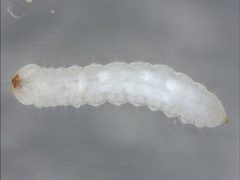
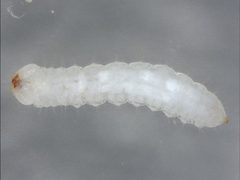
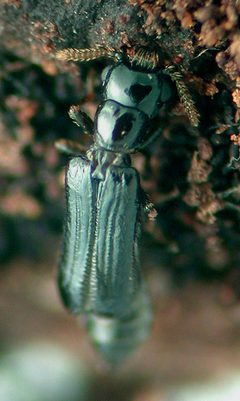
Micromalthus is a of beetles containing the single living Micromalthus debilis, commonly known as the telephone-pole beetle. It represents the sole extant member of the Micromalthidae, making it a "living fossil" with all other relatives extinct. The genus has been the subject of considerable taxonomic controversy, historically placed in various families including Lymexylidae and Telegeusidae before its current classification in Archostemata. Its reproductive is extraordinarily complex, involving multiple developmental and forms of .
Pronunciation
How to pronounce Micromalthus: /maɪ.kroʊˈmæl.θəs/
These audio files are automatically generated. While they are not always 100% accurate, they are a good starting point.
Identification
Micromalthus is distinguished from all other living beetles by its unique combination of characteristics: it is the only extant representative of Micromalthidae, with larvae exhibiting ( by stages). The is small and slender. Larval includes multiple distinct phenotypes associated with different reproductive strategies. Wing venation and male genitalia structure differ from those of related archostematan .
Images
Habitat
Associated with decaying wood, particularly in eastern North American forests. Larvae inhabit rotting logs and stumps where they feed on fungal and decaying wood tissue. The "telephone-pole beetle" derives from historical records of larvae being found in decaying wooden utility poles.
Distribution
Eastern United States, with records from the Atlantic seaboard westward through the Appalachian region and into the Midwest.
Diet
Larvae feed on fungal and decaying wood. likely feed on similar materials or may have reduced feeding requirements.
Life Cycle
is exceptionally complex and variable. Multiple larval phenotypes exist, including thelytokous (female-producing), arrhenotokous (male-producing), and amphiterotokous (both sexes-producing) parthenogenetic forms. occurs, with larvae capable of producing offspring. A flowchart is required to fully represent the developmental . Development includes both parthenogenetic and phases, with considerable phenotypic plasticity in larval .
Behavior
Larvae are known to exhibit , a rare reproductive strategy in which stages produce offspring. Different larval forms display different reproductive : some produce only females, some only males, and some both sexes. The precise triggers for developmental selection remain incompletely understood.
Ecological Role
Contributes to wood decomposition in forest through larval feeding activities. The complex represents a unique evolutionary experiment in developmental flexibility within beetles.
Human Relevance
Occasional pest of wooden utility poles and structures, giving rise to its . Of considerable scientific interest due to its unique reproductive and status as a living fossil.
Similar Taxa
- LymexylidaeHistorically confused with Micromalthus; both are archostematan associated with wood-boring larvae, but Lymexylidae lack the complex paedogenetic and multiple larval phenotypes of Micromalthus.
- TelegeusidaeFormerly considered a possible placement for Micromalthus; telegeusids are small, slender beetles but possess fundamentally different larval and .
- OmmaAnother archostematan "living fossil" , but in Ommidae; are more robust with different wing venation, and larvae lack the paedogenetic found in Micromalthus.
More Details
Taxonomic history
Classification of Micromalthus was historically among the most controversial in Coleoptera. First described by LeConte in 1878, it was variously placed in Polyphaga within Lymexylidae or Telegeusidae, or as its own within . Modern phylogenetic studies based on larval , wing structure, and male genitalia have firmly placed it in Archostemata as the sole living member of Micromalthidae.
Reproductive complexity
The of Micromalthus debilis is arguably the most complex known in beetles. Heath Blackmon's 2010 analysis documented thelytokous, arrhenotokous, and amphiterotokous , all occurring within the paedogenetic larval stage. This developmental flexibility is unique among living beetles and represents a remarkable evolutionary retention of ancestral reproductive plasticity.