
Micromalthidae
Barber, 1913
Telephone-pole Beetles
Genus Guides
1- Micromalthus(telephone-pole beetle)
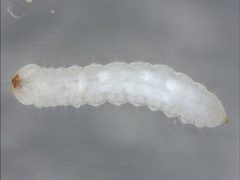
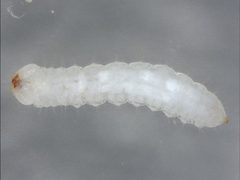
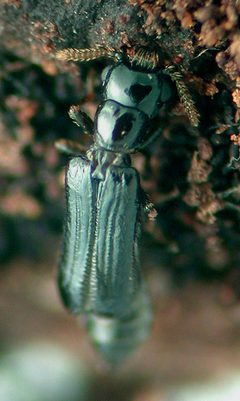
is an ancient, relictual of beetles in the suborder Archostemata, represented today by a single extant , Micromalthus debilis. The family has a fossil record extending to the Late Permian (approximately 260 million years ago), making it one of the oldest surviving lineages. Members are characterized by highly unusual reproductive , including ( by larvae) and . The family shows extreme morphological reduction in , particularly males, with larvae serving as the primary feeding and persistent life stage.
Pronunciation
How to pronounce Micromalthidae: /maɪ.kroʊˈmæl.θɪ.diː/
These audio files are automatically generated. While they are not always 100% accurate, they are a good starting point.
Images
Habitat
Associated with decaying hardwood, particularly rotting logs and stumps in moist forest environments. Larvae are and require wood in advanced stages of fungal decay.
Distribution
Extant Micromalthus debilis occurs in eastern North America, with records from the United States and a single Central American record. Fossil representatives are known from Late Permian Siberia (Archaeomalthus), mid-Cretaceous Burmese amber from Myanmar (Protomalthus burmaticus, ca. 100 Ma), and additional Cretaceous deposits, indicating a historical Gondwanan distribution.
Diet
Decaying wood (xylophagy); larvae feed specifically on fungal-decayed hardwood. of Micromalthus debilis have reduced mouthparts and do not feed.
Life Cycle
Complex polymorphic with multiple reproductive . The life cycle includes , larval (with up to 7-8 instars), pupal, and stages. Larvae are the , long-lived stage and can reproduce via , producing either additional larvae or eggs that develop into adults. Two main reproductive modes occur: (producing only females) in some , and bisexual in others. Adult males are , short-lived, and non-feeding.
Behavior
: larvae reproduce without . Extreme male dwarfism and morphological reduction. males do not feed and have highly reduced mouthparts. Larvae are the persistent, dispersing, and primary reproductive stage. Developmental allows flexible switching between reproductive strategies.
Ecological Role
Decomposer in forest ; contributes to wood decomposition and nutrient cycling through larval feeding on decaying hardwood.
Human Relevance
Of scientific interest as a "living fossil" and for its unique reproductive . Occasionally found in wooden structures, including telephone poles (source of ), though economic impact is minimal.
Similar Taxa
- CupedidaeSister group relationship supported by larval morphological features including transverse and strongly rounded , absence of stemmata, shortened , presence of sternal asperities, and eversible lobes of segment IX; both share xylobiontic habits and shortened .
- LymexylidaeHistorically confused with due to superficial similarities, but molecular and morphological data confirm Micromalthidae belongs to Archostemata, not Polyphaga; larvae of Lymexylidae lack the specialized paedogenetic and associated morphological reductions seen in Micromalthidae.
More Details
Evolutionary significance
represents one of the earliest lineages of beetles to evolve shortened , a trait shared with Gyrinidae. The 's persistence for over 250 million years, combined with its highly derived reproductive , makes it exceptional for studying evolutionary transitions in development and reproductive mode.
Bacterial endosymbionts
Bacteria are regularly present in the haemolymph of all developmental stages of Micromalthus debilis; their function remains unknown, though they have been speculatively linked to the vestigialization of .
Taxonomic history
Classification was historically controversial; the was variously placed in Lymexylidae, Telegeusidae, or as a within before larval, wing, and male genitalia characters confirmed placement in Archostemata.
Sources and further reading
- BugGuide
- Wikipedia
- GBIF taxonomy match
- iNaturalist taxon
- NCBI Taxonomy
- Catalogue of Life
- A new genus and species of Micromalthidae from Burmese amber (Coleoptera: Archostemata)
- Larval morphology and phylogenetic position of Micromalthus debilis LeConte (Coleoptera: Micromalthidae)
- The life cycle of Micromalthus debilisLeConte (1878) (Coleoptera: Archostemata: Micromalthidae): historical review and evolutionary perspective
- Archaeomalthus-(Coleoptera, Archostemata) a ‘ghost adult’ of Micromalthidae from Upper Permian deposits of Siberia?
- A Record of Micromalthus debilis (Coleoptera: Micromalthidae) from Central America and a Discussion of Its Distribution
- Entwicklungsablauf und ‐stadien vonMicromalthus debilisLeConte (Col., Micromalthidae) aus einer Laboratoriums‐Population1
- The extant telephone-pole beetle genusMicromalthusdiscovered in mid-Cretaceous amber from northern Myanmar (Coleoptera: Archostemata: Micromalthidae)
- The head morphology of Micromalthus debilis (Coleoptera: Micromalthidae) - an archostematan beetle with an unusual morphology and a unique life cycle