
Notomicrus
Sharp, 1882
Species Guides
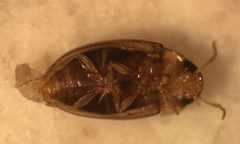
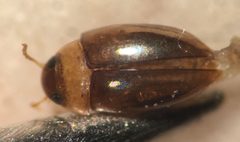
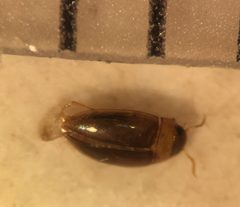
1Notomicrus is a of small water beetles in the Noteridae, first described by Sharp in 1882. occur in freshwater across the New World, from North America through Central America to South America and the Caribbean. The genus includes at least 13 described species, with several recent descriptions from Guadeloupe and Suriname. Some species exhibit unusual reproductive traits, including suspected obligate .
Pronunciation
How to pronounce Notomicrus: /noʊˈtoʊmɪkrəs/
These audio files are automatically generated. While they are not always 100% accurate, they are a good starting point.
Identification
identification relies primarily on examination of external male genitalia, particularly the shape of the lobe of the . Male specimens can be distinguished by the respective shapes of the pro- and mesotarsal claws. Some species exhibit distinctive elytral punctation patterns, such as weakly punctate in N. petrareptans.
Images
Habitat
Freshwater aquatic environments including standing and flowing waters. One (N. petrareptans) has been documented from hygropetric seep on inselbergs, representing the first member of the Notomicrinae known from this specialized habitat type.
Distribution
New World distribution spanning North America, Central America, South America, and the Caribbean. Documented from Colombia (Orinoquía region), Suriname, and Guadeloupe. Multiple are to restricted localities, including three species endemic to Guadeloupe.
Similar Taxa
- NoteridaeNotomicrus is distinguished from other noterid by its placement in the Notomicrinae and tribe Notomicrini, with -level identification requiring examination of male genitalia rather than external alone.
Sources and further reading
- BugGuide
- Wikipedia
- GBIF taxonomy match
- iNaturalist taxon
- NCBI Taxonomy
- Catalogue of Life
- The genus Notomicrus in Guadeloupe, with description of three new species (Coleoptera: Noteridae)
- The New World species of the water‐beetle genus Notomicrus (Noteridae)*
- Notomicrus petrareptans sp. n., a new seep-dwelling species of Noteridae <br />from Suriname (Coleoptera: Adephaga)