
Noteridae
C. G. Thomson, 1860
Burrowing Water Beetles
Genus Guides
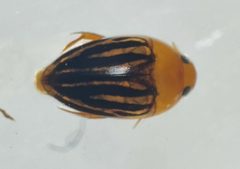
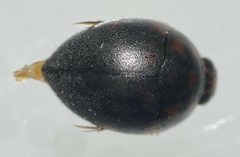
5is a of small aquatic beetles in the order Coleoptera, suborder Adephaga, containing approximately 230 in 14 . Formerly classified within Dytiscidae, the family is distinguished by a characteristic structure known as the "noterid platform"—a plate located between the second and third pairs of legs. Members are found worldwide with greatest diversity in tropical regions. Both and larvae are aquatic and inhabit freshwater environments.
Pronunciation
How to pronounce Noteridae: //noʊˈtɛrɪdiː//
These audio files are automatically generated. While they are not always 100% accurate, they are a good starting point.
Identification
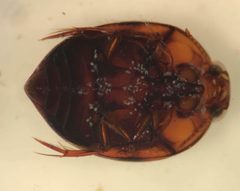
Distinguished from Dytiscidae and other adephagan water beetles by the presence of the noterid platform—a diagnostic plate between the meso- and metacoxae. Small size (under 6 mm) and smooth oval body form aid recognition. Specimens require examination of ventral structures for definitive identification.
Images
Appearance
Small beetles ranging from 1 to 6 mm in length. Body smooth and oval, colored from light brown to darker reddish brown. short and partially concealed by the prothorax. surface features a distinctive "noterid platform"—a plate-like structure between the meso- and metacoxae.
Habitat
Freshwater aquatic including ponds, marshes, and wetlands. Associated with submerged vegetation and soft substrates. Both and larvae are aquatic.
Distribution
Worldwide distribution with highest diversity and abundance in tropical regions. Documented from North America (Wisconsin), Central and South America (Gabon, Guadeloupe, Argentina, Iberá wetlands), Europe (Denmark), and Asia.
Diet
Primarily with scavenging observed in some .
Life Cycle
Both and larvae are aquatic. Specific developmental details vary by ; Notomicrus femineus in Guadeloupe has been observed to consist entirely of females and is suspected to reproduce by obligate .
Behavior
Known for burrowing through pond and marsh substrate, giving rise to the "." Commonly found around aquatic plants.
Ecological Role
Component of aquatic macroinvertebrate in freshwater . Predatory and scavenging habits contribute to nutrient cycling in pond and marsh .
Similar Taxa
- DytiscidaeFormerly classified together; distinguished by absence of noterid platform and generally larger size
- HaliplidaeSmall aquatic adephagan beetles; distinguished by different structure and leg
More Details
Taxonomic History
Formerly treated as a of Dytiscidae; elevated to status based on distinctive morphological characters, particularly the noterid platform. Contains two subfamilies: Noterinae (tribe Noterini) and Notomicrinae (tribes Notomicrini and Phreatodytini).
Research Gaps
Biological details remain poorly documented for most . specifics, detailed requirements, and feeding are known primarily from general -level descriptions rather than species-specific studies.
Sources and further reading
- BugGuide
- Wikipedia
- GBIF taxonomy match
- iNaturalist taxon
- NCBI Taxonomy
- Catalogue of Life
- Noteridae, Dytiscidae (Coleoptera) du Gabon (8ème partie). Monts de Cristal
- Dytiscidae and Noteridae of Wisconsin (Coleoptera). I. Introduction, Key to Genera of Adults, and Distribution, Habitat, Life Cycle, and Identification of Species of Agabetinae, Laccophilinae and Noteridae
- The genus Notomicrus in Guadeloupe, with description of three new species (Coleoptera: Noteridae)
- The Hydradephaga (Coleoptera, Dytiscidae, Gyrinidae, Haliplidae, Noteridae) of the Iberá wetlands, the second largest wetland area of South America.
- The genus Liocanthydrus Guignot, 1957 (Coleoptera, Noteridae) in Argentina: new records and larval morphology.