Dineutus angustus
LeConte, 1878
whirligig beetle
Dineutus angustus is a of whirligig beetle in the Gyrinidae, first described by LeConte in 1878. The species is found in North America. As a member of the Dineutus, it is among the larger whirligig beetles, characterized by a hidden scutellum and rounded elytral apices. Like other gyrinids, it inhabits the surface of freshwater bodies where it forms called rafts.
Pronunciation
How to pronounce Dineutus angustus: //dɪˈneɪ.juːtəs æŋˈɡʌs.təs//
These audio files are automatically generated. While they are not always 100% accurate, they are a good starting point.
Identification
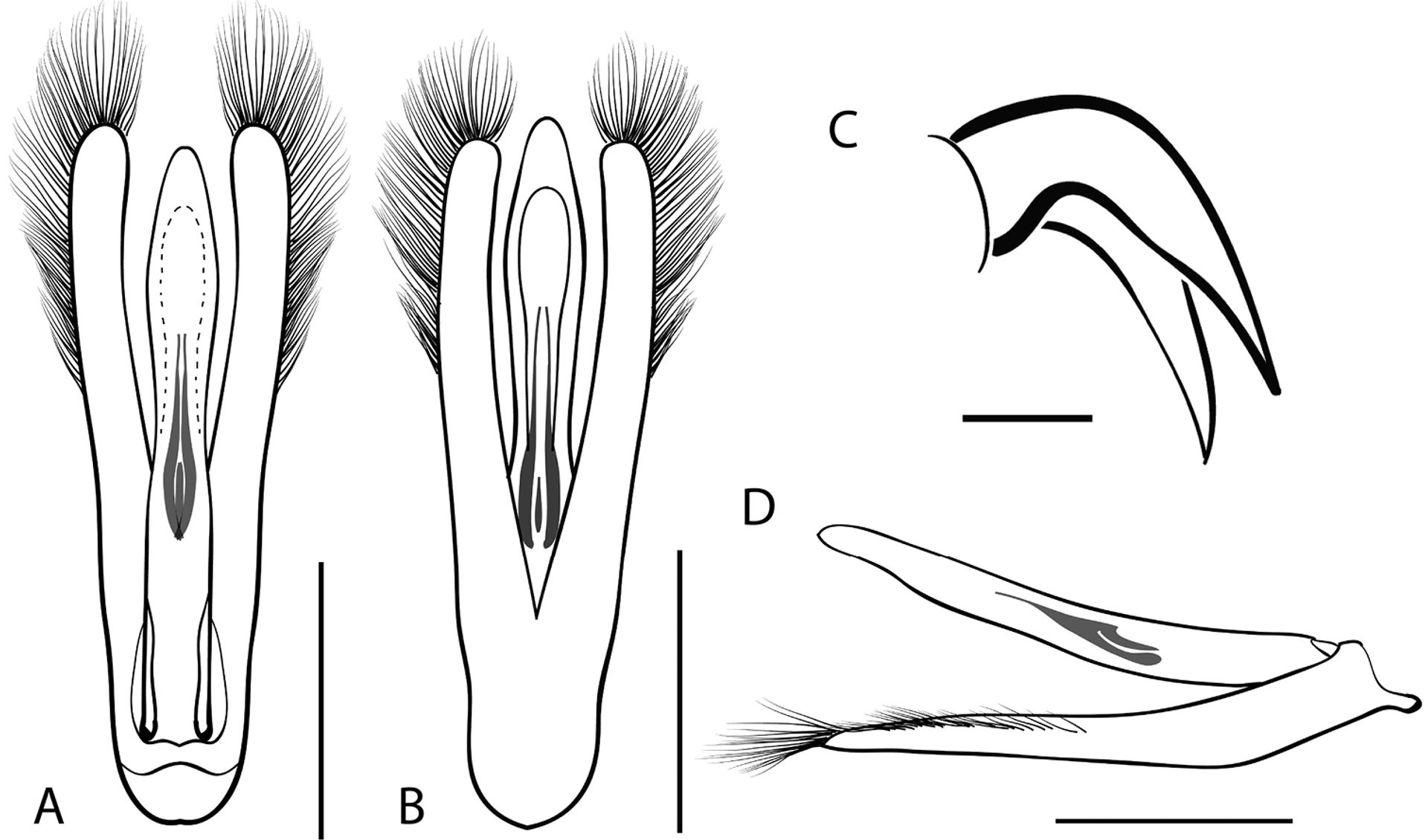
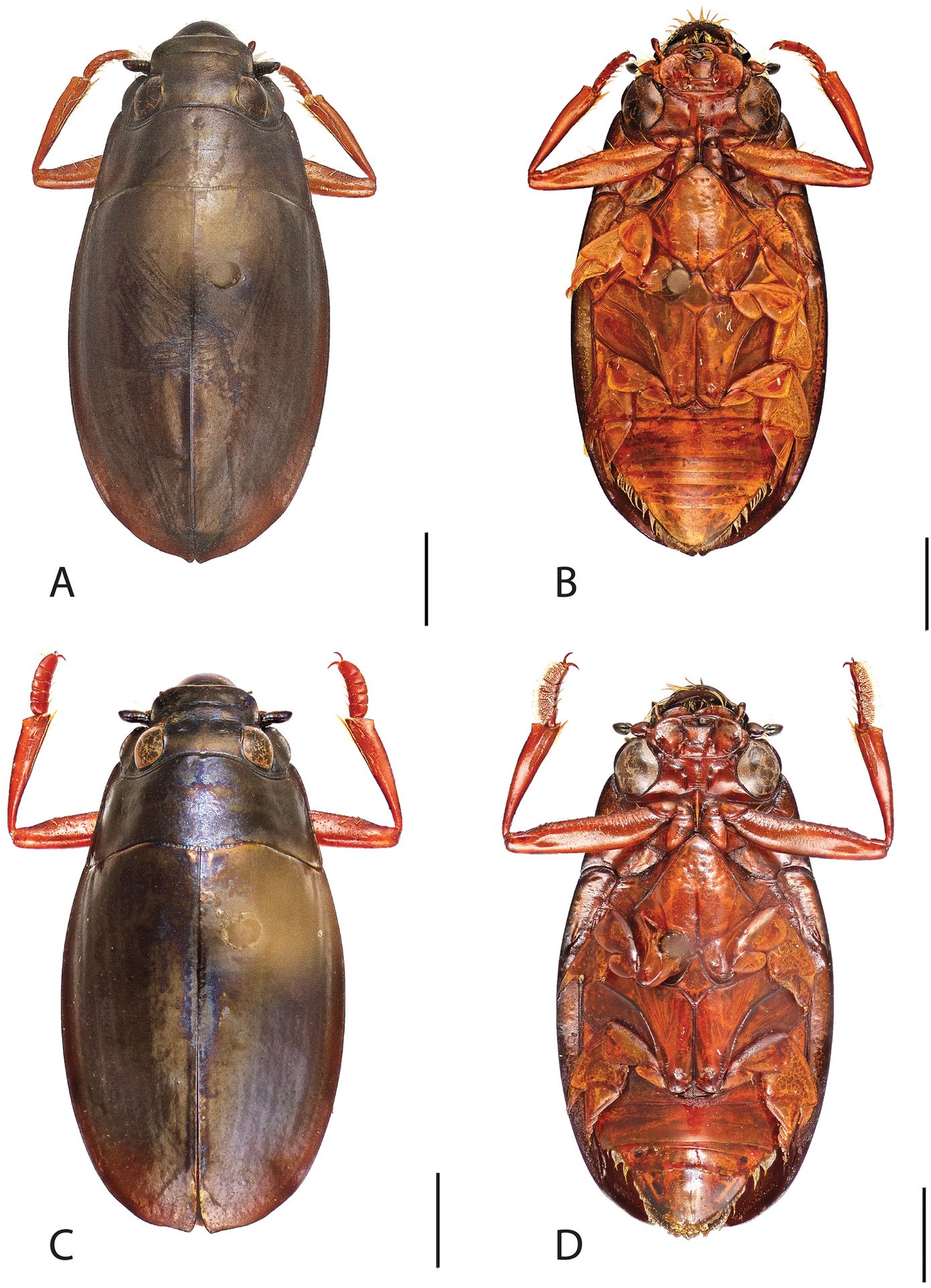
within Dineutus are distinguished primarily by coloration and details of the male genitalia. Dineutus angustus can be separated from similar species by examination of these characters. The Dineutus is distinguished from the other North American genus Gyrinus by its larger size (typically 10–12 mm or more in length) and the hidden scutellum. Rounded elytral apices are characteristic of Dineutus and help narrow identification to a few possible species within the genus.
Images
Habitat
Found in freshwater aquatic environments, particularly the surface waters of rivers and streams. Based on related in the , likely prefers clear, slow-moving or standing water where can form.
Distribution
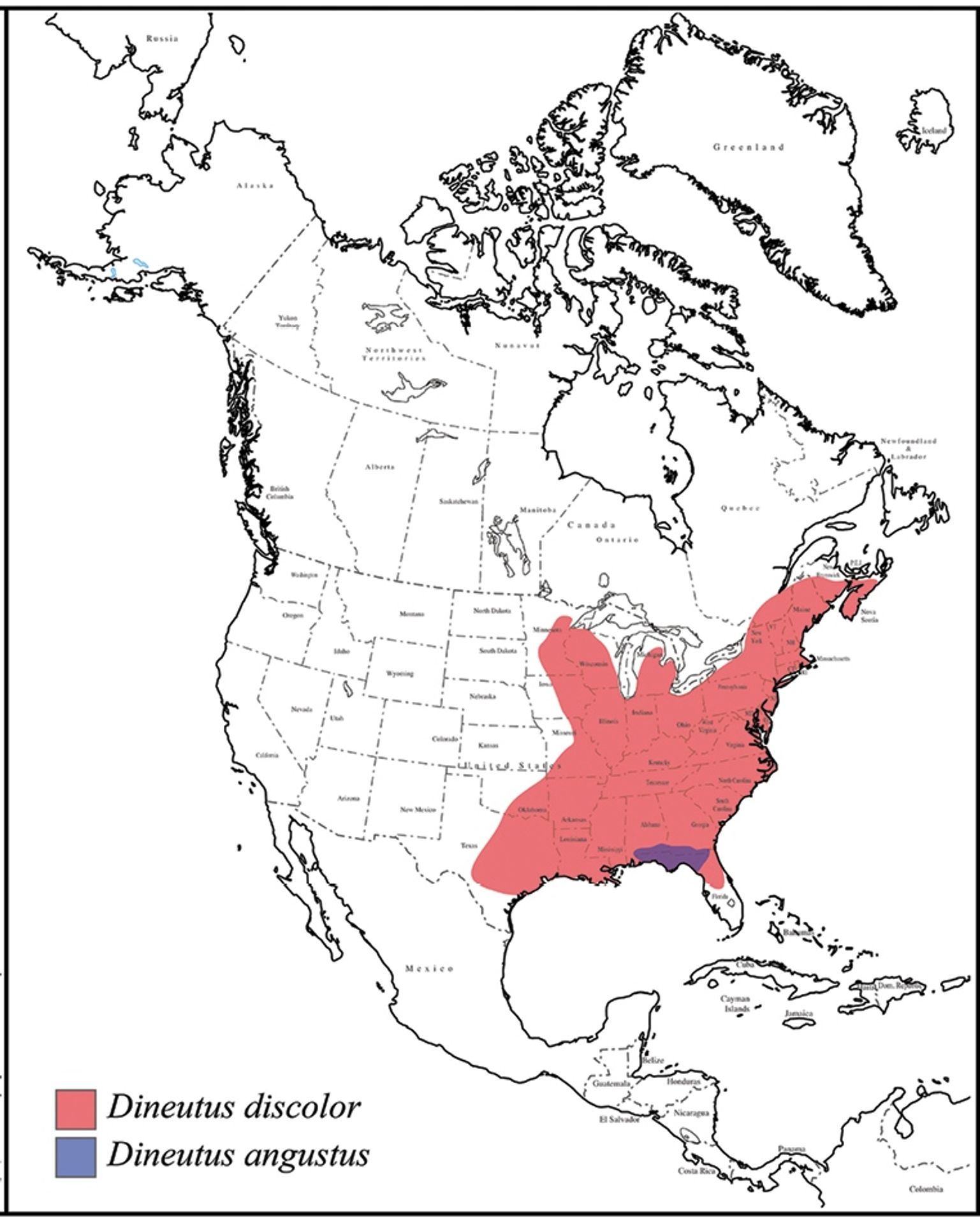
North America. Specific range details within North America are not well documented in available sources.
Similar Taxa
- Dineutus discolorSimilar size and general appearance; distinguished by coloration and male genitalia structure
- Dineutus ciliatusSimilar body form with dark legs; distinguished by characters and specific details of the protarsus and
- Dineutus emarginatusSimilar overall but has orange legs rather than dark legs, providing a visible field character
- Gyrinus spp.Shares Gyrinidae and surface-dwelling habit, but Gyrinus are smaller with exposed scutellum and more pointed elytral apices
More Details
Taxonomic history
Described by John Lawrence LeConte in 1878. The has received limited modern study compared to some other Dineutus species.
Sources and further reading
- BugGuide
- Wikipedia
- GBIF taxonomy match
- iNaturalist taxon
- Bembicid Holdings | Entomology Research Museum
- Gyrinidae | Beetles In The Bush
- New Whirligig Beetle Showcases U.S. Biodiversity Hotspot
- Spooky eyes on the Stygian rainforest floor: Headlight beetles, fire beetles, Pyrophorus spp. — Bug of the Week
- Super Crop Challenge #15 | Beetles In The Bush
- June | 2010 | Beetles In The Bush | Page 2