
Dineutus emarginatus
Say, 1823
whirligig beetle
Dineutus emarginatus is a of whirligig beetle in the Gyrinidae, distributed across North America. Whirligig beetles in this are characterized by their relatively large size (approximately 12 mm in length) and distinctive surface-swimming . D. emarginatus can be distinguished from congeneric species by its orange legs, contrasting with the dark-legged D. ciliatus. Like other gyrinids, they inhabit freshwater surfaces where they form and feed on small organisms or scavenged debris.
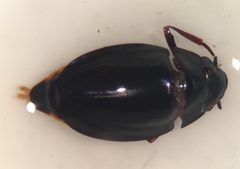
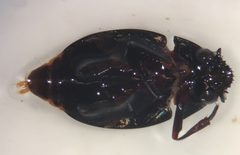
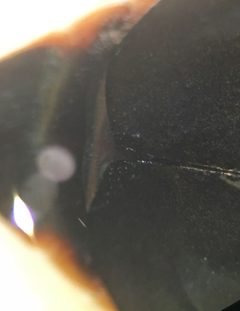
Pronunciation
How to pronounce Dineutus emarginatus: //dɪˈnjuːtəs ɛˌmɑːrɡɪˈneɪtəs//
These audio files are automatically generated. While they are not always 100% accurate, they are a good starting point.
Identification
Distinguished from other Dineutus primarily by orange leg coloration (contra dark legs of D. ciliatus). Large size (~12 mm) and hidden scutellum separate it from the smaller Gyrinus. Rounded elytral apices help narrow identification to a subset of Dineutus species. Positive identification typically requires examination of coloration and male genitalia. In Missouri, only two genera of whirligig beetles occur—Dineutus and Gyrinus—with Dineutus species being larger and having the scutellum concealed.
Images
Appearance
Relatively large whirligig beetle, approximately 12 mm in length. Body oval and streamlined, adapted for surface swimming. Scutellum hidden beneath the pronotum. with rounded apices. Legs orange in color, a key distinguishing feature from similar . Body coloration non-aposematic, typical of the . Males possess modified protarsi presumably used for grasping females during mating.
Habitat
Freshwater aquatic including rivers, streams, and pools with clear, calm water surfaces. In the Ozark region, found in clear, cold waters over gravelled bottoms sustained by seeps and springs. Prefers sheltered pools near shorelines where surface form. Associated with forested watersheds and karst geology in some portions of its range.
Distribution
North America. Documented in the United States, including Missouri (Ozark region) and potentially the southeastern coastal plain. GBIF records confirm presence in North America.
Diet
Feeds on small organisms or scavenges debris from the water surface. Specific prey items for D. emarginatus have not been documented.
Behavior
Forms or 'rafts' on the water surface with conspecifics and other whirligig beetles. These aggregations serve multiple functions: increased detection through more scanning for threats, and potentially aposematic signaling to fish predators via the paired pygidial glands that produce noxious chemicals. Movement is fast, erratic, and unpredictable—characteristic zigzagging surface swimming that makes photography challenging. Highly skittish, readily escaping when approached.
Ecological Role
Surface-dwelling aquatic insect that contributes to nutrient cycling through scavenging. Pygidial gland secretions may serve chemical defense functions against fish . Aggregative suggests mutualistic benefits in predator detection among raft members.
Human Relevance
Subject of entomological interest due to challenging photography requirements posed by rapid, erratic movement. Occasionally encountered by hikers and naturalists in Ozark stream . No documented economic importance or pest status.
Similar Taxa
- Dineutus ciliatusSimilar size and rounded elytral apices, but distinguished by dark leg coloration versus orange legs in D. emarginatus
- Dineutus discolorLarger and more common in some regions, distinguished by morphological details of protarsus and proportions
- Gyrinus spp.Only other whirligig beetle in Missouri; distinguished by smaller size and exposed scutellum
More Details
Photographic challenge
Considered among the most difficult insects to photograph due to constant motion, unpredictable zigzagging swimming patterns, and skittish requiring photographers to balance precariously near water surfaces to approach closely.
Taxonomic history
in the Dineutus are distinguished primarily by coloration and male genitalia characteristics, requiring careful examination for definitive identification.