
Laccophilus fasciatus terminalis
Sharp, 1882
Laccophilus fasciatus terminalis is a of diving in the Dytiscidae, described by Sharp in 1882. As a member of the Laccophilus, it belongs to a group of small predatory aquatic beetles commonly known as crawling water beetles. The subspecies designation indicates geographic or morphological variation within the widespread Laccophilus fasciatus. Like other laccophilines, it inhabits freshwater environments where it preys on small .
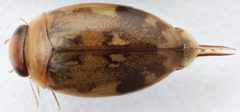
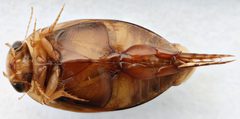
Pronunciation
How to pronounce Laccophilus fasciatus terminalis: //lækˈkɒfɪləs fæsˈsaɪətəs tɜːˈmɪnəlɪs//
These audio files are automatically generated. While they are not always 100% accurate, they are a good starting point.
Images
Habitat
Freshwater aquatic environments including ponds, lakes, and slow-moving streams. Members of the Laccophilus typically inhabit vegetated margins and shallow waters where they can crawl among submerged vegetation and detritus.
Distribution
Middle America and North America. The epithet 'terminalis' and the original description by Sharp (1882) suggest this was described from material in the southern portion of the range, likely in Mexico or the southwestern United States.
Similar Taxa
- Laccophilus fasciatus fasciatusThe nominate of the same , likely differing in geographic distribution and subtle morphological features such as elytral pattern or body proportions.
- Other Laccophilus speciesCongeneric share similar small size, oval body shape, and aquatic habits, requiring examination of male genitalia and detailed elytral punctation patterns for definitive identification.
More Details
Taxonomic Status
The Laccophilus fasciatus terminalis was established by David Sharp in 1882. The Laccophilus is one of the most -rich genera of Dytiscidae, with numerous subspecies described primarily based on geographic variation in color pattern and body size.
Nomenclatural Note
The terminalis epithet refers to the terminal (end) position, likely in reference to a morphological feature such as the position of a marking on the or a structural character. Sharp's original description would have been based on specimens from a specific locality in the southern portion of the range.
Sources and further reading
- BugGuide
- GBIF taxonomy match
- iNaturalist taxon
- Catalogue of Life
- Encyrtid Holdings | Entomology Research Museum
- What do insects do in winter? Migrants in the DMV: Common Buckeye, Junonia coenia, Variegated Fritillary, Euptoieta Claudia, Painted Lady, Vanessa cardui, Large Milkweed bug, Oncopeltus fasciatus — Bug of the Week
- Bugs in Orange and Black II: Large milkweed bug, Oncopeltus fasciatus — Bug of the Week
- Orange and Black II: Milkweed leaf beetle, Labidomera clivicollis; Oleander aphid, Aphis nerii; Milkweed Bug, Oncopeltus fasciatus; Monarch, Danaus plexippus — Bug of the Week
- Bugs in orange and black - Monarch butterfly, Danaus plexippus Milkweed Bug - Oncopeltus fasciatus; Milkweed tiger moth, Euchaetes egle — Bug of the Week
- Orange and Black Bugs- Milkweed leaf beetle, Labidomera clivicollis; Oleander aphid, Aphis nerii; Milkweed Bug - Oncopeltus fasciatus; Monarch butterfly, Danaus plexippus — Bug of the Week