
Laccophilinae
Gistel, 1848
Genus Guides
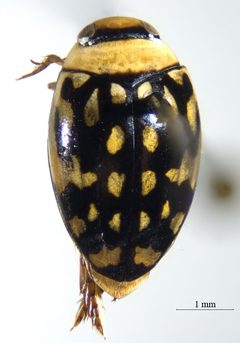
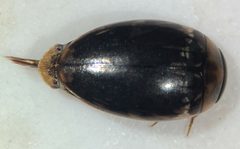
3Laccophilinae is a of diving beetles ( Dytiscidae) containing at least 410 described . The subfamily is distributed globally, with significant diversity in the Neotropical region and . Species are generally small diving beetles associated with lentic (still water) . The subfamily includes the Laccophilus, one of the most species-rich genera in Dytiscidae.
Pronunciation
How to pronounce Laccophilinae: //ˌlæk.oʊ.fəˈlaɪniː//
These audio files are automatically generated. While they are not always 100% accurate, they are a good starting point.
Identification
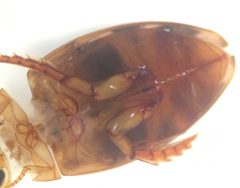
Members of Laccophilinae can be distinguished from other Dytiscidae by characters of the tribe Laccophilini, including: antennomeres that may be simple or expanded; metacoxal processes with variable hind margin shapes; and metatibiae with spurs. Within Laccophilini, are distinguished by specific morphological features such as the shape of the prosternal process, female genital structures, and the degree of incision of the metacoxal process hind margin. identification often requires examination of male genitalia due to uniform body shape, size, and coloration across many .
Images
Habitat
in this are associated with lentic waters (still water environments) including ponds, pools, and other standing water bodies. In tropical regions, they are commonly found in various freshwater . Specific habitat preferences vary by and species.
Distribution
Global distribution with major diversity centers in the Neotropical region (including Brazil, Cuba, Ecuador, and the Caribbean) and the . The Laccomimus is widespread in tropical America, with one (L. pumilio) reaching Florida, USA. The genus Laccosternus occurs in the Oriental region.
Life Cycle
As diving beetles, members undergo complete with , larval, pupal, and stages. For at least one (Laccophilus nakajimai), occurs in natural pupal separate from the aquatic larval environment, though specific details of pupal habitat structure are not provided in available sources.
Similar Taxa
- AgabetinaeAnother of Dytiscidae; distinguished by different morphological characters of and larvae, though specific distinguishing features require detailed examination
- CybistrinaeLarge predatory diving beetles; Laccophilinae are generally smaller and differ in body proportions and male genitalia structure
- Dytiscinae containing many common diving beetles; Laccophilinae distinguished by tribal characters of Laccophilini including antennomere structure and metacoxal process
More Details
Taxonomic composition
The contains at least 13 : Africophilus, Agabetes, Australphilus, Japanolaccophilus, Laccodytes, Laccophilus, Laccoporus, Laccosternus, Napodytes, Neptosternus, Philaccolilus, Philaccolus, Philodytes, plus the more recently described genus Laccomimus (2015) and Hamadiana (2019). Laccophilus is the type genus and among the most diverse.
Recent taxonomic revisions
The Laccomimus was erected in 2015 to accommodate specimens formerly misidentified as Laccodytes; it is sister to Laccosternus based on shared body size and shape, female genital structures, and prosternal process shape. Hamadiana was described in 2019 from Central Brazil and is unique among Laccophilini in having a deeply incised metacoxal process hind margin.
Sources and further reading
- BugGuide
- Wikipedia
- iNaturalist taxon
- NCBI Taxonomy
- Catalogue of Life
- Description of a new species of Laccodytes Régimbart, 1895 (Coleoptera, Dytiscidae, Laccophilinae) from Cuba
- Description of Laccomimus gen. n. and eleven new species from the Neotropical region (Coleoptera, Dytiscidae, Laccophilinae)
- Hamadiana chapadensis, a new genus and species of diving beetle from Brazil (Coleoptera, Dytiscidae, Laccophilinae, Laccophilini)
- Natural Pupal Habitat of the Diving Beetle Laccophilus nakajimai Kamite, Hikida, and Satô, 2005 (Coleoptera: Dytiscidae: Laccophilinae)
- Laccomimus xikrin sp. nov. and new records of other species of Laccomimus Toledo & Michat, 2015 (Coleoptera: Dytiscidae: Laccophilinae) from Brazil
- Dytiscidae and Noteridae of Wisconsin (Coleoptera). I. Introduction, Key to Genera of Adults, and Distribution, Habitat, Life Cycle, and Identification of Species of Agabetinae, Laccophilinae and Noteridae