
Laccophilus
Leach, 1815
Species Guides
15Laccophilus is a of small diving beetles in the Dytiscidae, distributed across temperate and tropical regions worldwide. These beetles inhabit freshwater environments and are characterized by their compact, oval bodies and relatively short . The genus contains numerous , though many remain poorly documented. Members are active swimmers and in aquatic .
Pronunciation
How to pronounce Laccophilus: //lækˈkɒfɪləs//
These audio files are automatically generated. While they are not always 100% accurate, they are a good starting point.
Identification
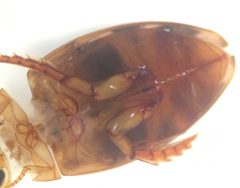
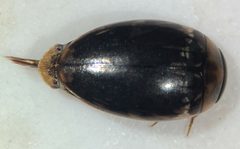
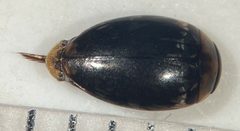
Laccophilus are distinguished from other dytiscid by their small size (typically 2–5 mm), oval to elongate-oval body shape, and short, . The pronotum is usually narrower than the base of the , creating a visible constriction. The hind legs are flattened and fringed with setae for swimming, but are proportionally shorter than those of larger diving beetles. Elytral coloration varies by species, often with pale markings on a dark background.
Images
Habitat
Freshwater including ponds, lakes, slow-moving streams, and wetlands. occupy both permanent and temporary water bodies, including those with dense vegetation or detritus.
Distribution
Nearly in temperate and tropical regions. Documented from Europe, the Near East, North Africa, the Nearctic, the Oriental region, and South America including Colombia.
Behavior
Active swimmers that remain submerged for extended periods, surfacing periodically to replenish air stores carried beneath the . When disturbed, they may dive rapidly or swim in erratic patterns.
Ecological Role
in freshwater , feeding on small and potentially serving as prey for larger aquatic organisms. Their role in specific is not well documented.
Similar Taxa
- Hydroporinae (subfamily)Small diving beetles with similar size and ; distinguished by different body proportions and male genitalia structure, which require examination for reliable separation.
- CoptolabrusOverlaps in some regions; Coptolabrus typically have more convex bodies and different pronotal shapes.