
Agabinae
C. G. Thomson, 1867
Tribe Guides
2Agabinae is a of predaceous diving beetles within the Dytiscidae, comprising 9 extant and more than 460 described . The subfamily is divided into two tribes: Agabini (containing Agabus, Ilybius, Platambus, and related genera) and Hydrotrupini (containing Hydrotrupes, Platynectes, and related genera). Species occur across all continents except Antarctica, with significant diversity in the Northern Hemisphere and notable radiations in Australia, South America, and the Indo-Pacific. Members are aquatic inhabiting diverse freshwater from lowland ponds to high mountain streams.
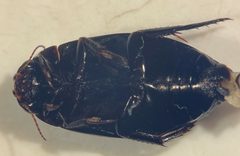
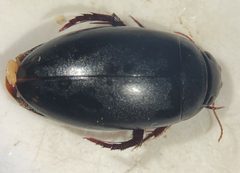
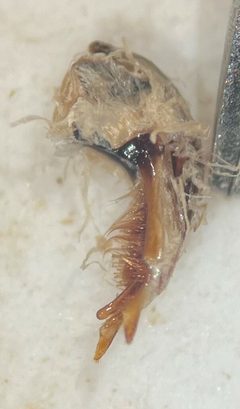
Pronunciation
How to pronounce Agabinae: /æɡəˈbaɪniː/
These audio files are automatically generated. While they are not always 100% accurate, they are a good starting point.
Identification
Agabinae can be distinguished from other Dytiscidae by the combination of: pronotum without lateral bead; prosternal process narrow and pointed or rounded at apex, not distinctly broadened; and mesotarsal claws of equal length. The subfamily is further characterized by relatively elongate body form compared to Colymbetinae, and by the absence of the metasternal modifications found in Hydroporinae. Tribe-level identification requires examination of male genitalia and metacoxal processes: Agabini possess a metacoxal process with a distinct lateral lobe, while Hydrotrupini have a reduced or absent lateral lobe and modified structure.
Images
Habitat
Freshwater aquatic including ponds, lakes, streams, and rivers. Specific habitat associations vary by : Platynectes occur in small rainforest streams and rest pools of intermittent creeks in Australia; Platambus semenowi-group species inhabit higher mountain regions in Central Asia and the Himalayas; and Platynectes (s. str.) species are found across Brazilian and Guiana Shield regions.
Distribution
distribution across all continents except Antarctica. Documented occurrences include: North America (widespread), Europe (widespread), Asia (Central Asia, northern India, Nepal, Bhutan, Pakistan, China, Japan), Australia (at least 17 of Platynectes), South America (Brazil, Colombia, Chile, Peru, Bolivia), Central America ( Rica, Panama, Mexico), and Pacific islands (Solomon Islands, Vanuatu, New Caledonia).
Similar Taxa
- ColymbetinaeSimilar elongate body form and aquatic habits, but distinguished by pronotum with distinct lateral bead and prosternal process broadened apically.
- HydroporinaeOverlapping preferences, but Hydroporinae typically smaller with modified metasternal structures for air storage and different male genitalia architecture.
- CopelatinaeBoth contain streamlined diving beetles, but Copelatinae have distinctly different mandibular structure and metacoxal configuration.
Sources and further reading
- BugGuide
- Wikipedia
- iNaturalist taxon
- NCBI Taxonomy
- Catalogue of Life
- A review of the genus Platynectes from the Solomon Islands (Coleoptera: Dytiscidae: Agabinae)
- Two new species of the genus Platambus Thomson, 1859 from China (Coleoptera: Dytiscidae, Agabinae)
- Taxonomic revision of Australian Platynectes Régimbart, 1879 (part I)—four new species from Queensland (Coleoptera: Dytiscidae, Agabinae)
- New records of Platynectes (s. str.) diving beetles from South America with description of two new species (Coleoptera: Dytiscidae: Agabinae)
- The genus Platynectes (Coleoptera: Dytiscidae: Agabinae) in Central America, with the discovery of the northernmost Neotropical species in Oaxaca, Mexico, and nomenclatural notes on the subgenus Agametrus
- Multi-sample long-read nanopore sequencing of Agabus bipustulatus (Coleoptera: Dytiscidae: Agabinae) mitogenome produces effectively reliable data for downstream analyses.