
Agabini
C. G. Thomson, 1867
Genus Guides
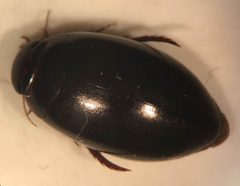
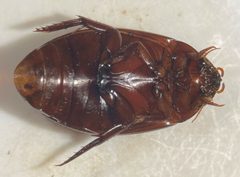
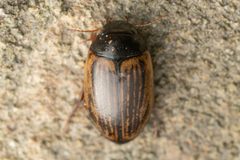
5Agabini is a tribe of predaceous diving beetles in the Dytiscidae, comprising approximately 500 across six : Agabus, Ilybius, Platambus, Agabinus, Hydronebrius, and Ilybiosoma. Members are primarily aquatic found in lentic (standing water) and lotic (flowing water) across the Holarctic region and beyond. The tribe exhibits diverse strategies, with variation in stages and habitat use between aquatic and terrestrial environments.
Pronunciation
How to pronounce Agabini: //ˈæɡəˌbaɪnaɪ//
These audio files are automatically generated. While they are not always 100% accurate, they are a good starting point.
Identification
Agabini can be distinguished from other Dytiscidae tribes by the combination of: prosternal process not or only weakly produced posteriorly; metacoxal processes with well-developed ; and absence of a distinct scutellar . Within the tribe, Agabus larvae are distinguished from Ilybius by the position of urogomphus setae, presence of metatarsal spines, and abdominal setae characteristics. Male genitalia, particularly the shape of the lobe and presence or absence of preapical spines, are critical for -level identification.
Images
Habitat
Primarily aquatic including lentic environments (ponds, lakes, pools) and lotic environments (streams, rivers). Some overwinter in terrestrial habitats, with leaving water bodies seasonally.
Distribution
Widespread across the Holarctic region; individual and show varying distributions. The confinis-group of Agabus has Afrotropical and Palearctic distribution. Documented from North America (e.g., 24 Agabus and 10 Ilybius species in Wisconsin), Europe, Asia (including the Qinghai-Tibet Plateau), and other regions.
Seasonality
Activity patterns vary by and type. active during warmer months; occurs in various life stages depending on species (, larvae, or adults).
Life Cycle
strategies vary by and type. Ilybius predominantly show cycles with larvae and completing development in spring; some are partially semivoltine with both and larvae overwintering. Lentic Agabus species exhibit three main types: Type 1 (univoltine, adults overwinter aquatically), Type 2 (univoltine, adults overwinter terrestrially), and Type 3 (mostly univoltine with overwintering, semivoltine with adults overwintering terrestrially). Lotic Agabus species have variable univoltine cycles with adults and sometimes larvae overwintering; most larvae develop in spring.
Behavior
strategies vary substantially: may remain in aquatic or move to terrestrial environments; or larvae may serve as the overwintering stage depending on and habitat type.
Similar Taxa
- ColymbetiniAnother tribe in Agabinae; distinguished by more strongly produced prosternal process and different metacoxal process structure.
- HydroporiniTribe in Hydroporinae; generally smaller body size, different metacoxal structure, and often more specialized preferences.
More Details
Included Genera
As of 2023, six are recognized: Agabus Leach, 1817 (the largest genus), Ilybius Erichson, 1832, Platambus Thomson, 1859, Agabinus Crotch, 1873, Hydronebrius Jakovlev, 1897, and Ilybiosoma Crotch, 1873.
Taxonomic History
Previously treated as subtribe Agabina within Colymbetinae; now placed in Agabinae following phylogenetic revisions of Dytiscidae.
Sources and further reading
- BugGuide
- Wikipedia
- iNaturalist taxon
- NCBI Taxonomy
- Catalogue of Life
- Observations on the genus Leuronectes Sharp, morphological aspects and geographic distribution (Coleoptera, Dytiscidae, Agabini)
- Agabus (Acatodes) puetzi sp. n., a new species of the confinis-group from the Qinghai-Tibet Plateau (Coleoptera, Dytiscidae, Agabini)
- Dytiscidae and Noteridae of Wisconsin (Coleoptera). IV. Distribution, Habitat, Life Cycle, and Identification of Species of Agabini (Colymbetinae)
- Dytiscidae and Noteridae of Wisconsin (Coleoptera). III. Distribution, Habitat, Life Cycle, and Identification of Species of Colymbetinae, Except Agabini