
Anillinus virginiae
Jeannel, 1963
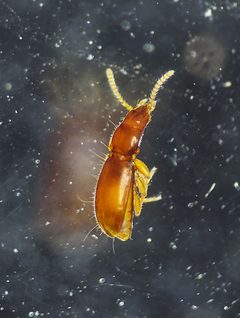
Anillinus virginiae is a of ground beetle in the Carabidae, described by Jeannel in 1963. It belongs to the Anillinus, a group of small, eyeless or reduced- beetles adapted to subterranean or cryptic . The species is known from the United States, with the specific epithet suggesting a type locality in Virginia. Like other members of the subtribe Anillina, it is likely associated with soil and leaf litter environments.
Pronunciation
How to pronounce Anillinus virginiae: /ænɪˈlaɪnəs vɜrˈdʒɪni.iː/
These audio files are automatically generated. While they are not always 100% accurate, they are a good starting point.
Identification
Members of Anillinus are distinguished from other ground beetles by their small size, reduced or absent , and elongated, slender body form adapted for moving through soil crevices. Specific identification of A. virginiae requires examination of male genitalia and other fine structural characters; external alone is insufficient for reliable determination within this .
Images
Habitat
Subterranean or deep soil and leaf litter environments, typical for eyeless trechine beetles.
Distribution
United States; specifically recorded from Virginia (implied by epithet).
Similar Taxa
- Other Anillinus species of reduction and slender body form in subterranean beetles makes visual distinction unreliable; dissection and genital examination required.
- Other Anillina subtribe members (e.g., Anillodes, Nesocoris)Shared subtribe characteristics of small size, reduced , and soil-dwelling habit; distinguished by subtle structural differences in mouthparts, , and genitalia.
More Details
Taxonomic Note
The Anillinus is part of the subtribe Anillina within the tribe Bembidiini. These beetles represent a classic example of troglomorphic , with reduction and elongation of appendages associated with subterranean life.
Collection Rarity
Based on GBIF and iNaturalist records, this is rarely collected or reported, with minimal observational data available in public databases.