
Akephorus obesus
(LeConte, 1863)
Obese Point-bearing Beetle
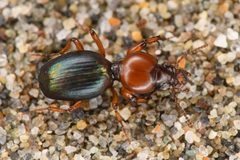
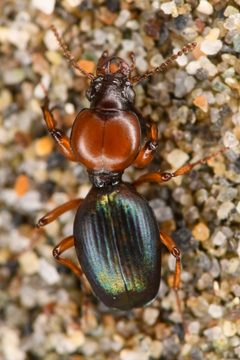
Akephorus obesus is a small ground beetle in the tribe Dyschiriini, characterized by a notably robust body form that inspired its specific epithet. The occurs across northern North America, with scattered records from Canada and the United States. As a member of the Carabidae , it likely inhabits soil and leaf litter environments, though specific ecological details remain poorly documented. The species was originally described by LeConte in 1863 under the Dyschirius before transfer to Akephorus.
Pronunciation
How to pronounce Akephorus obesus: //ˈækɪˌfɔːrəs oʊˈbiːsəs//
These audio files are automatically generated. While they are not always 100% accurate, they are a good starting point.
Identification
Akephorus obesus can be distinguished from by its compact, robust body shape—reflected in the 'obesus' meaning obese or fat. Members of the Akephorus possess characteristic pointed adapted for on small soil arthropods. The is smaller than most ground beetles in the Scaritinae, with a relatively short, broad . Accurate identification requires examination of male genitalia and comparison with the closely related Akephorus marinus and Akephorus vancouverensis.
Images
Distribution
Recorded from Canada and the United States. Distribution spans northern North America, with specific localities including Pacific coastal regions and interior northern areas. The precise range limits are poorly defined due to limited collecting effort.
Similar Taxa
- Akephorus marinusOverlaps in western coastal distribution; distinguished by more slender body proportions and different male genitalia structure.
- Akephorus vancouverensisSympatric in Pacific Northwest; differs in elytral microsculpture and overall body shape.
- Dyschirius speciesFormerly classified in this ; Akephorus possess more robust body form and modified protibial spurs for digging.
More Details
Taxonomic History
Originally described as Dyschirius obesus by John Lawrence LeConte in 1863. Transferred to the Akephorus based on distinctive morphological characters including body form and protibial structure. The genus Akephorus contains only three , all restricted to western North America.
Conservation Status
Not evaluated by IUCN. The appears to be naturally rare or undersampled, with only 17 observations recorded in iNaturalist as of 2024.