
Clivina
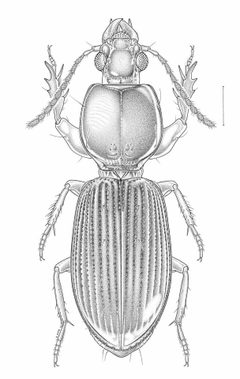
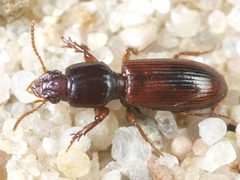
A ground beetle in the Clivina, Carabidae, from Stanislaus County, California. Members of this genus are small, carabid beetles adapted to burrowing in soil. The specific identity of this specimen is not determined beyond genus level.
Pronunciation
How to pronounce Clivina: /klɪˈviːnə ɛs piː ˈstænɪslaʊs koʊ ˈkælɪf/
These audio files are automatically generated. While they are not always 100% accurate, they are a good starting point.
Identification
Clivina are small carabid beetles with a distinctive compact, cylindrical body form adapted for burrowing. They possess a (forward-projecting) and modified forelegs for digging. Identification to species requires examination of male genitalia and other subtle morphological characters; the is notoriously difficult to distinguish from related genera such as Dyschirius and Reicheia without detailed dissection and reference to specialized keys.
Images
Habitat
Soil-dwelling , typically in moist or saturated ground near water sources or in low-lying areas with loose, workable substrate suitable for burrowing.
Distribution
This record is from Stanislaus County, California. The Clivina has a broad distribution across North America, with numerous occurring in the western United States.
Behavior
(burrowing) ; spends much of its below ground.
Similar Taxa
- DyschiriusSmall, carabids with similar body form; distinguished by details of pronotal structure and male genitalia.
- ReicheiaRelated scaritine with burrowing ; requires dissection for reliable separation from Clivina.
- BembidionAnother diverse carabid with small , but generally with more exposed, less habits and different body proportions.