
Pelophila borealis
(Paykull, 1790)
boreal mud-loving beetle
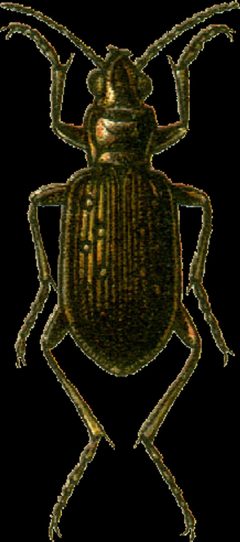
Pelophila borealis is a of ground beetle in the Nebriinae, first described by Gustaf von Paykull in 1790. It is a small, shiny black measuring 9.5–10.1 mm in length. The species has a Holarctic distribution, occurring across northern Eurasia and North America.
Pronunciation
How to pronounce Pelophila borealis: //pɛˈlɒfɪlə bɔːˈriːəlɪs//
These audio files are automatically generated. While they are not always 100% accurate, they are a good starting point.
Identification
The combination of small size (under 11 mm), shiny black coloration without markings, and occurrence in and arctic distinguishes this from most other ground beetles in its range. It is the only species in the Pelophila, making generic identification straightforward. Within the Nebriinae, the small size and polished black appearance separate it from larger, often more patterned relatives.
Images
Appearance
Small ground beetle with a shiny black . Body length ranges from 9.5 to 10.1 mm. The , unmarked black coloration is distinctive within its range.
Habitat
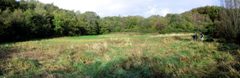
and arctic environments, including tundra, taiga, and northern forest-edge . Associated with moist, muddy, or riparian conditions as suggested by its and name (Pelophila = mud-loving).
Distribution
Holarctic distribution: Belarus, Canada, Estonia, Finland, Latvia, Norway, Russia, and Sweden. Records indicate presence in Alaska.
Similar Taxa
- Nebria spp.Other Nebriinae ground beetles share the but are generally larger, often with patterned or metallic coloration, and lack the small, uniformly shiny black appearance of Pelophila borealis.
- Other small CarabidaeSmall black ground beetles in other (e.g., Bembidiini) often have elytral or microsculpturing that reduces shininess, and lack the specific combination of size, gloss, and preference.