
Notiophilus novemstriatus
LeConte, 1847
nine-lined big-eyed beetle
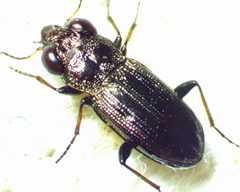
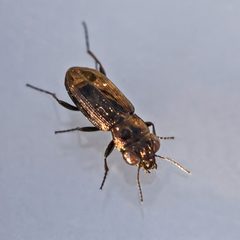
Notiophilus novemstriatus, known as the nine-lined big-eyed , is a small ground beetle in the Carabidae. It measures approximately 4.5 mm in length and exhibits a brassy black coloration. The is distinguished by its wide and large , features that reflect its name meaning 'eye-lover.' It occurs throughout eastern U.S. states and extends westward to Arizona.
Pronunciation
How to pronounce Notiophilus novemstriatus: //noʊˈtaɪoʊˌfaɪləs noʊˌvɛmstriˈeɪtəs//
These audio files are automatically generated. While they are not always 100% accurate, they are a good starting point.
Identification
Distinguished from other Notiophilus by the combination of its small size (approximately 4.5 mm), brassy black coloration, and the nine-lined pattern referenced in its specific epithet. The wide and large are characteristic of the . Accurate identification to species level may require examination of elytral and other fine morphological details.
Images
Appearance
Small approximately 4.5 mm in length. Brassy black coloration with metallic luster. Wide with disproportionately large, prominent . Body form typical of the Notiophilus, which is characterized by enlarged eyes adapted for visual hunting.
Distribution
North America; eastern United States westward to Arizona. Documented from Vermont and across the eastern U.S. range.
Similar Taxa
- Other Notiophilus speciesShare the characteristic large and wide of the ; require careful examination of elytral striation patterns and body size for differentiation.
More Details
Taxonomic authority
First described by John Lawrence LeConte in 1847, a prominent American entomologist who described thousands of North American .