
Poecilus scitulus
LeConte, 1846
woodland ground beetle
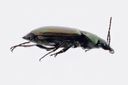
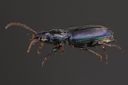
Poecilus scitulus is a of ground beetle in the Carabidae. It belongs to the Poecilus, a group of predatory beetles commonly found in agricultural and woodland . The species has been documented in Central America and North America, with confirmed records from Canada and the United States. Like other members of its genus, it is likely a ground-dwelling , though specific ecological details remain limited in published sources.
Pronunciation
How to pronounce Poecilus scitulus: //ˈpiːsɪləs ˈskɪtʃʊləs//
These audio files are automatically generated. While they are not always 100% accurate, they are a good starting point.
Identification
Members of the Poecilus can be distinguished from similar ground beetles by their (thread-like) and the structure of the elytral intervals. Poecilus scitulus specifically can be identified by its taxonomic authority (LeConte, 1846) and geographic distribution. Accurate -level identification within Poecilus typically requires examination of male genitalia and detailed elytral punctation patterns. The species may be confused with other Poecilus species such as P. chalcites, which has been documented in similar agricultural in eastern North America.
Images
Habitat
Associated with woodland and agricultural environments. The has been collected in strip-tilled agricultural fields, suggesting for disturbed but not heavily tilled soils. Specific microhabitat preferences are not well documented.
Distribution
Central America and North America. Confirmed records from Canada and the United States. GBIF distribution records indicate presence in Middle America and North America.
Ecological Role
Human Relevance
Documented in studies of agricultural practices, specifically in research on strip tillage effects on ground beetle diversity. The was captured in strip-tilled squash and melon fields during a two-year study (2013–2014) in Maryland and Pennsylvania, where it was among the species less disrupted by strip tillage compared to conventional tillage or plasticulture.
Similar Taxa
- Poecilus chalcitesBoth are found in eastern North American agricultural and were captured in the same strip-tillage study. P. chalcites was notably abundant in the second year of the study, whereas P. scitulus appears to be less frequently encountered.
- Harpalus pensylvanicusAnother ground beetle frequently captured in the same agricultural studies. H. pensylvanicus is larger and more abundant in many disturbed , and belongs to a different within Carabidae with distinct morphological features.
More Details
Taxonomic Note
The specific epithet 'scitulus' (Latin for 'elegant' or 'neat') was assigned by John Lawrence LeConte in 1846. LeConte was a prolific American entomologist who described thousands of North American beetles.
Research Context
P. scitulus was among 38 carabid captured in a study examining ground beetle responses to farming practices in cucurbit production. The study demonstrated that strip tillage preserved diversity better than plasticulture, though P. scitulus was not among the captured (unlike Harpalus pensylvanicus or Cicindela punctulata).