
Poecilus chalcites
(Say, 1823)
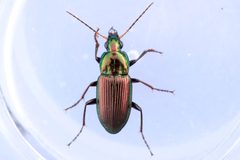
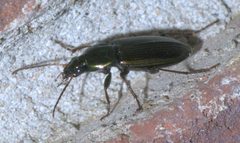
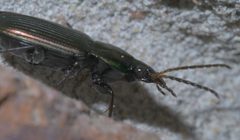
Poecilus chalcites is a ground beetle in the Carabidae, commonly found in agricultural systems and croplands across North America, Central America, and the Caribbean. The is recognized for its role as a agent, feeding on multiple crop pests including corn rootworm, corn earworm, and species. in foretarsus shape allows straightforward sex identification: males possess a -shaped foretarsus, while females have a thinner structure. Laboratory rearing studies have established protocols for maintaining colonies, though laboratory-reared typically fail to reproduce.
Pronunciation
How to pronounce Poecilus chalcites: //ˈpiːsɪləs ˈkælkaɪtiːz//
These audio files are automatically generated. While they are not always 100% accurate, they are a good starting point.
Identification
Males and females are distinguished by the shape of the most foretarsus: -shaped in males, thinner in females.
Images
Habitat
Agricultural croplands, including squash and gourd fields; woodland edges. The is particularly common in strip-tillage systems, which preserve ground beetle better than conventional tillage or plasticulture.
Distribution
North America, Central America, and the Caribbean. Common in croplands of Illinois and surrounding states.
Diet
; feeds on crop pests including Diabrotica virgifera virgifera (western corn rootworm), Helicoverpa zea (corn earworm), Agrotis ipsilon (black cutworm), and Mythimna unipuncta ().
Life Cycle
Complete with , larval, pupal, and stages. Laboratory rearing on untreated Fer-Til soil achieved 70–80% rates with successful larval development. Laboratory-reared adults did not lay eggs, indicating that captive conditions may lack necessary cues or nutritional components for .
Behavior
Predatory; active as a ground-dwelling hunter in agricultural fields. Sensitive to soil management practices, with better preserved under strip-tillage compared to conventional tillage or plastic mulch systems.
Ecological Role
Beneficial in agricultural ; contributes to of insect pests. Serves as a bioindicator of farming practice impacts on ground beetle .
Human Relevance
Valued as a natural enemy of agricultural pests. Strip-tillage practices that conserve this and other carabid beetles may reduce reliance on chemical pest control.
Sources and further reading
- BugGuide
- Wikipedia
- GBIF taxonomy match
- iNaturalist taxon
- NCBI Taxonomy
- Beneficial Beetle Diversity Blooms on Strip-Tilled Farms
- Rearing Protocol and Life History Traits for Poecilus chalcites (Coleoptera: Carabidae) in the Laboratory
- Bacterial Communities Associated with the Digestive Tract of the Predatory Ground Beetle, Poecilus chalcites, and Their Modification by Laboratory Rearing and Antibiotic Treatment