
Pterostichitae
Tribe Guides
7- Abacetini
- Chlaeniini
- Morionini
- Oodini
- Panagaeini(Hairy Ground Beetles)
- Pterostichini(Woodland Ground Beetles)
- Zabrini(Seed-eating Ground Beetles)
Pterostichitae is a subtribe of ground beetles within the tribe Pterostichini ( Carabidae). Members are predominantly ground-dwelling beetles characterized by their robust body form and typically dark coloration. The subtribe includes numerous distributed across temperate and regions, with many adapted to forest floor and soil surface . Pterostichitae species are generally slow-moving, that contribute significantly to dynamics in their .
Pronunciation
How to pronounce Pterostichitae: //tɛˌɹɒstɪˈkaɪtiː//
These audio files are automatically generated. While they are not always 100% accurate, they are a good starting point.
Identification
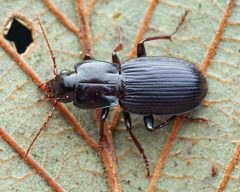
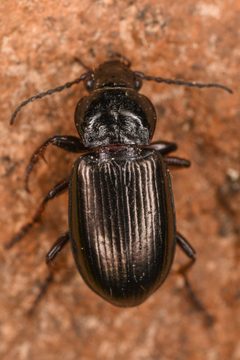
Pterostichitae are distinguished from other Pterostichini subtribes primarily by genitalic characters, particularly the structure of the male . Externally, members often show a combination of: pronotal shape with distinctly sinuate or constricted hind angles; elytral intervals that are flat or moderately convex; and with pubescent beginning on antennomere 4 or 5. These beetles are generally larger and more robust than related subtribes such as Abacetitae, with a more convex profile.
Images
Habitat
Forest floor , including deciduous, coniferous, and mixed woodlands; also found in grassland steppe, tundra-edge, and riparian zones. Many occupy mesic to moderately moist microhabitats within leaf litter, moss layers, and upper soil horizons. Some extend into anthropogenic habitats including old fields and forest edges.
Distribution
Holarctic distribution with primary diversity in the Palearctic region, especially Europe and northern Asia. Significant representation in North America, particularly in and montane zones. Absent or poorly represented in tropical and arid regions.
Seasonality
activity generally peaks in spring (April–June) and autumn (August–October) in temperate regions, with reduced summer activity during hot, dry periods. Many overwinter as adults. Larval development occurs primarily during summer months.
Ecological Role
Predatory members of soil and litter ; contribute to regulation of including potential pest . Serve as prey for larger invertebrates, amphibians, birds, and small mammals. Some species function as bioindicators of continuity and forest integrity due to their sensitivity to disturbance and limited capacity.
Human Relevance
Limited direct economic importance. Some have been evaluated for potential use in of agricultural pests, though not widely implemented. Frequently collected and studied in biodiversity assessments and ecological monitoring programs due to their abundance and specificity.
Similar Taxa
- AbacetitaeOverlaps in general body form and use; distinguished by more slender build, different pronotal structure, and male genitalic .
- EuchroinaShares tribe Pterostichini but differs in elytral patterns and typically more brightly colored or metallic appearance.