
Zabrini
Bonelli, 1810
Seed-eating Ground Beetles
Genus Guides
2- Amara(Sun Beetles)
- Pseudamara
Zabrini is a tribe of ground beetles in the Carabidae, Pterostichinae, with more than 750 described across three . The tribe is divided into two subtribes: Amarina (containing Amara and Pseudamara) and Zabrina (containing Zabrus). Species are found primarily in the Holarctic region, with exceptional diversity in China. The 'Seed-eating Ground Beetles' reflects observed in some species, though feeding habits vary considerably across the tribe.
Pronunciation
How to pronounce Zabrini: /zəˈbraɪnaɪ/
These audio files are automatically generated. While they are not always 100% accurate, they are a good starting point.
Identification
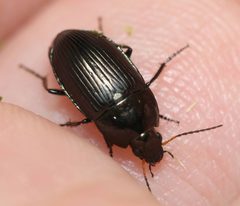
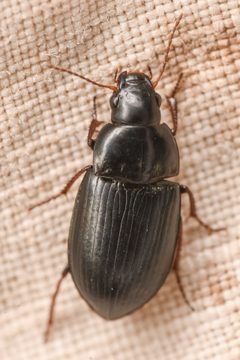
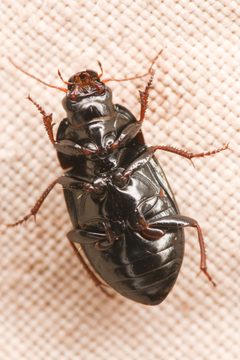
Zabrini is distinguished from other Pterostichinae tribes by a combination of morphological characters including the structure of the prosternal process and male genitalia. Within the tribe, subtribe Amarina (Amara, Pseudamara) differs from Zabrina (Zabrus) in various structural features. The subgenus Curtonotus, regarded as the most basal clade of Zabrini, is characterized by medium to large body size (7–25 mm), prosternal process not bordered without setae at apex, cordate pronotum constricted at base, and male mesotibiae with projections (denticles) in most . Species-level identification requires examination of male genitalia and other subtle morphological characters.
Images
Habitat
occupy diverse open including grassland, alpine meadow, coastal areas, riparian flood plains, riverbanks, and forest margins. Many species inhabit environments shared with other Amara and Harpalus species. Some species occur in urban areas and agrarian lands; others have been recorded near residential areas. The type locality of Amara (Curtonotus) beijingensis is Xiaolongmen Forest Park, Beijing, at 1100 m elevation.
Distribution
Holarctic distribution with centers of diversity in North America and Europe, and exceptional in China (94 valid ). Fifteen species occur in the (seven also in the Palearctic), while 79 species are confined to the . In China, 41 species are recorded, widely distributed in northern regions with others restricted to southwestern mountainous areas. Eastern China provinces harbor significant diversity excluding Xinjiang and Xizang.
Diet
Feeding habits vary across the tribe. Some Zabrini exhibit during larval and/or stages. Amara (Curtonotus) gigantea larvae are but predominantly : laboratory studies show high survival (89%) on mixed diets of animal prey (Tenebrio larvae) plus seeds, 83% survival on animal prey alone, but markedly lower survival on seeds alone with no larvae reaching second instar. Animal food is essential for larval development in this species. Adults of some species consume both insect larvae and plant seeds.
Life Cycle
Larvae pass through at least two pre- instars. Laboratory rearing indicates high mortality during overwintering under artificial conditions. Both and larvae demonstrate feeding activity, with diet composition affecting survival and developmental duration.
Behavior
are attracted to light sources. Some species climb on stalks or leaves for foraging. Males of most Curtonotus species exhibit modified mesotibiae with one to three distinct denticles, a sexually dimorphic trait potentially involved in copulation and possibly linked to sexual conflict between sexes. Some species are aggressive .
Ecological Role
Ground beetles in this tribe are important components of soil in temperate zones. Potential roles in pest and weed control in urban areas and agrarian lands have been suggested based on their presence in these environments and their predatory and granivorous feeding habits.
Similar Taxa
- HarpaliniCo-occurs with Zabrini in similar ; distinguished by different morphological characters of the prosternal process and male genitalia structure.
- PterostichiniFellow tribe in Pterostichinae; Zabrini distinguished by specific combinations of structural features including prosternal process .
More Details
Subtribal classification
Zabrini contains two subtribes: Amarina Zimmermann, 1832 ( Amara, Pseudamara) and Zabrina Bonelli, 1810 (genus Zabrus). The subgenus Curtonotus within Amara is regarded as the most basal clade of the tribe.
Species diversity
More than 600 of the 750+ described Zabrini belong to the Amara, making it one of the largest genera in Carabidae.
Taxonomic note
Four groups are recognized in eastern Chinese Curtonotus: gigantea group, tumida group, brevicollis group, and macronota group.
Sources and further reading
- BugGuide
- Wikipedia
- iNaturalist taxon
- NCBI Taxonomy
- Catalogue of Life
- Laboratory studies on the larval food habits of the ground beetleAmara(Curtonotus)gigantea(Motschulsky) (Coleoptera: Carabidae: Zabrini)
- Revision of the macropterous subgenus Curtonotus from east China, with the description of a new species (Carabidae, Zabrini, Amara).