
Morionini
Brullé, 1837
Genus Guides
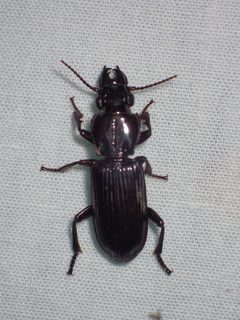
1Morionini is a tribe of ground beetles (Carabidae) in the Pterostichinae, established by Brullé in 1837. The tribe is represented in the Western Hemisphere by at least two , including the Neotropical genus Moriosomus. Members of this tribe are primarily associated with forest , particularly under bark and in decaying wood. The tribe's classification and generic composition have been subject to taxonomic revision, with ongoing work to clarify boundaries and geographic distributions.


Pronunciation
How to pronounce Morionini: /mɔrɪˈoʊnɪnaɪ/
These audio files are automatically generated. While they are not always 100% accurate, they are a good starting point.
Identification
Morionini can be distinguished from other carabid tribes by characteristics detailed in taxonomic keys for the Western Hemisphere . The tribe includes genera such as Moriosomus, which is restricted to the Neotropics. Specific diagnostic features for the tribe are defined in formal taxonomic treatments, with genus-level identification requiring examination of external structure.
Images
Habitat
Forest , particularly rainforests. of at least one (Moriosomus) have been found under tree bark and in rotting logs.
Distribution
Neotropical region, with records from Colombia, Rica, Nicaragua, Ecuador, Panamá, and Peru. The tribe also occurs in other regions, though Western Hemisphere representation includes at least two .
Life Cycle
Larvae are unknown for at least some member (e.g., Moriosomus).
Similar Taxa
- Other Pterostichinae tribesMorionini is distinguished from related tribes within the Pterostichinae by morphological characteristics detailed in taxonomic keys, particularly for Western Hemisphere .
More Details
Taxonomic History
The authorship and date of Morionini is correctly cited as Brullé, 1837. Related -level taxonomic dates have been subject to correction in the literature; for example, the genus Moriosomus was incorrectly cited as 1864 in some sources but was actually described in 1855.