
Oodini
LaFerté-Sénectère, 1851
Genus Guides
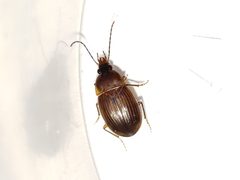
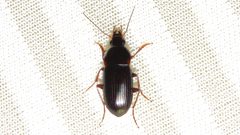
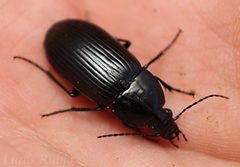
7Oodini is a tribe of ground beetles (Carabidae: Harpalinae) containing over 400 in 43 , with highest diversity in tropical Africa. Members are generally associated with standing water . The tribe is distinguished by two diagnostic morphological characters: a laterally coadunate metepisternum and an elytral ridge formed by fusion of elytral intervals 7 and 8.
Pronunciation
How to pronounce Oodini: //oʊˈɒdɪnaɪ//
These audio files are automatically generated. While they are not always 100% accurate, they are a good starting point.
Identification
Distinguished from other Carabidae by two characters: laterally coadunate metepisternum (exoskeletal feature where the metepisternum is or joined laterally), and an elytral ridge formed by fusion of intervals 7 and 8 on the hardened forewings.
Images
Habitat
Generally associated with standing water. Specific notes vary by and region; Nearctic, Mexican, and West Indian species occupy diverse aquatic and semi-aquatic environments.
Distribution
Worldwide distribution with highest in tropical Africa. Documented in Nearctic, Mexican, and West Indian regions with detailed distribution maps available for regional fauna.
More Details
Taxonomic history
The tribe was established by LaFerté-Sénectère in 1851. Recent taxonomic revision of Nearctic, Mexican, and West Indian fauna (1996) recognized eight and 25 in this region, described four new species, elevated Oodes fluvialis to species status, established several synonymies, and replaced the junior homonym Nanodes with Nanodiodes.
Species diversity
counts vary among sources: approximately 300 species in 32 (iNaturalist/Wikipedia) versus over 400 species in 43 genera (Wikipedia alternate figure). This discrepancy reflects ongoing taxonomic changes and varying classification schemes.