
Lebia vittata
Letzner, 1850
Colorful foliage ground beetle
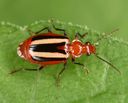
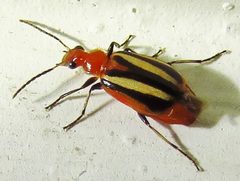
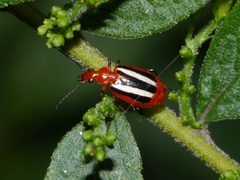
Lebia vittata is a of ground beetle in the Carabidae, commonly known as the colorful foliage ground beetle. It is found in North America, with records from Canada, the United States, and Mexico. The species is attracted to lights at night, suggesting activity patterns. Like other members of the Lebia, it is relatively small but draws attention with bright metallic wing covers.
Pronunciation
How to pronounce Lebia vittata: //ˈle.bi.a vɪˈtɑː.ta//
These audio files are automatically generated. While they are not always 100% accurate, they are a good starting point.
Identification
Distinguished from other ground beetles by its small size and bright metallic . Within the Lebia, specific identification to L. vittata requires examination of subtle morphological characters not detailed in general sources. Distinguished from similar foliage ground beetles in related genera by combination of size, metallic coloration, and association.
Images
Habitat
Found in dry, mixed conifer forest with oaks at elevations around 7,000 feet. Attracted to lights at night, suggesting open or edge where light penetration occurs. Specific microhabitat preferences within forested areas are not well documented.
Distribution
North America: Canada, United States, and Mexico. Specific regional records include southwestern New Mexico (Grant County).
Seasonality
Active in late October based on light trap records. Attraction to lights in autumn suggests activity during this period, though broader seasonal patterns are not documented.
Behavior
, attracted to blacklights and artificial light sources. This has been documented in dry, mixed conifer forest at night.
Ecological Role
As a ground beetle, likely functions as a in forest floor and foliage . Specific ecological impacts are not documented for this .
Human Relevance
Occasionally encountered by entomologists and naturalists during insect surveys using light traps. No documented economic or agricultural significance.
Similar Taxa
- Other Lebia speciesShare small size and metallic coloration; require detailed examination for separation
- Chlaenius tricolorAnother vivid metallic ground beetle attracted to lights, but larger and in different
More Details
Taxonomic Note
There is conflicting authorship information in sources: Letzner, 1850 per NCBI and Catalogue of Life, versus Fabricius, 1777 per GBIF. This may reflect synonymy or nomenclatural history requiring resolution.
Light Attraction Context
Observed at blacklight setup in Pinos Altos, New Mexico, alongside diverse insect fauna including , leafhoppers, and other beetles.
Sources and further reading
- BugGuide
- Wikipedia
- GBIF taxonomy match
- iNaturalist taxon
- NCBI Taxonomy
- Catalogue of Life
- Jasmin Ramirez Bonilla: Targeting Cucumber Beetles on Melons | Bug Squad
- Bug Eric: Last Night to Blacklight?
- Chrysomelidae | Beetles In The Bush | Page 5
- Bug Eric: New Mexico Night Bugs
- Bug Eric: Eight Illinois Wasp and Bee Mimics in Twenty Minutes