
Lebia atriventris
Say, 1823
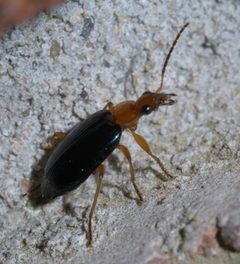
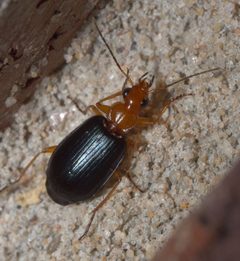
Lebia atriventris is a of ground beetle in the Carabidae, first described by Thomas Say in 1823. It is one of approximately 700 species in the Lebia, which is characterized by small, often brightly colored beetles commonly known as colorful foliage ground beetles. The species is documented from the United States and Canada. Members of this genus are typically found in vegetation and are attracted to lights at night.
Pronunciation
How to pronounce Lebia atriventris: //ˈlɛ.bi.ə ˌæ.trɪˈvɛn.trɪs//
These audio files are automatically generated. While they are not always 100% accurate, they are a good starting point.
Identification
The Lebia can be recognized by small body size (typically under 10 mm), often with metallic or bright coloration on the , and relatively long legs adapted for running on vegetation. -level identification within Lebia requires examination of detailed morphological characters including male genitalia, and cannot be reliably determined from general appearance alone. L. atriventris specifically would be distinguished from by subtle differences in color pattern, body proportions, and genitalic structures, though these characters are not readily summarized in available literature.
Images
Distribution
United States and Canada. GBIF records confirm presence in both countries, with distribution spanning North America.
Behavior
are and attracted to lights, as has been observed for other members of the Lebia.
Similar Taxa
- Other Lebia speciesNumerous share similar small size, metallic coloration, and foliage-dwelling habits; -level identification requires examination of genitalic and other subtle morphological characters.
- Other Carabidae (ground beetles)Many small carabids occur in similar ; Lebia is distinguished by its association with foliage rather than ground-dwelling , and often brighter coloration than most ground beetles.
More Details
Taxonomic authority
The was described by Thomas Say in 1823, a foundational figure in American entomology. The specific epithet 'atriventris' refers to the black ('ater') belly or underside ('venter').