
Elaphrus americanus
Dejean, 1831
Species Guides
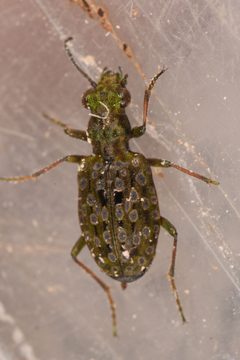
2Elaphrus americanus is a ground beetle in the Elaphrinae, described by Dejean in 1831. The species occurs across much of Canada and parts of the United States. Members of the Elaphrus are frequently mistaken for tiger beetles (Cicindelinae) due to their similar appearance, though they are true ground beetles (Carabidae). Taxonomic analysis has identified this species as part of a complex that includes E. finitimus and multiple with distinct geographic distributions.
Pronunciation
How to pronounce Elaphrus americanus: //əˈlæfrəs əˌmɛrɪˈkeɪnəs//
These audio files are automatically generated. While they are not always 100% accurate, they are a good starting point.
Identification
Elaphrus americanus can be distinguished from true tiger beetles (Cicindelinae) by examination of tarsal structure and other internal morphological features. The is separable from its E. finitimus through numerical taxonomic analysis of morphometric characters, particularly in the shape and proportions of various body parts. identification requires geographic context combined with analysis of specific character measurements.
Images
Distribution
Occurs across much of Canada and extends into the northern United States. The shows distinct geographic structuring, with the nominate in regions and E. americanus sylvanus occurring in western North America (Oregon). Distribution records include Alaska, Canada, and the contiguous United States.
Behavior
Similar Taxa
- Cicindela species (tiger beetles)Elaphrus are frequently mistaken for tiger beetles due to of body form, including large , long legs, and fast-running . Distinguishable by tarsal structure and other morphological details.
- Elaphrus finitimusSister within the E. americanus complex, separable through morphometric analysis and geographic distribution.
More Details
Taxonomic Complexity
The E. americanus complex has been subject to detailed numerical taxonomic analysis, revealing cryptic diversity including previously unrecognized . The western subspecies E. americanus sylvanus was formally described based on morphometric differentiation from .
Sources and further reading
- BugGuide
- Wikipedia
- GBIF taxonomy match
- iNaturalist taxon
- NCBI Taxonomy
- Catalogue of Life
- Congratulations, UC Davis Linnaean Games Team: National Champs! | Bug Squad
- A First Class Box of Beetles | Beetles In The Bush
- Oklahoma is More than OK for Burying Beetles
- Analysis of variation in the Elaphrus americanus complex of North America (Coleoptera: Carabidae)