
Miscodera arctica
(Paykull, 1798)
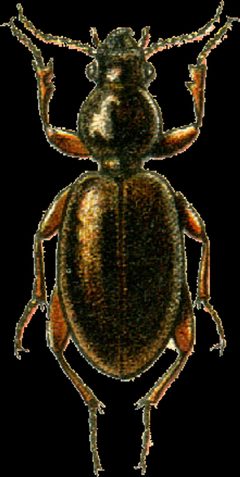
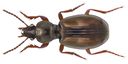
Miscodera arctica is a ground beetle ( Carabidae) and the sole in its . It has a Holarctic distribution, occurring across northern regions of North America and Eurasia. The species is placed in the Broscinae, a group of carabid beetles often associated with cool or montane . As the only member of Miscodera, it represents a lineage within the diverse ground beetle fauna.
Pronunciation
How to pronounce Miscodera arctica: /mɪsˈkoʊdərə ˈɑrktɪkə/
These audio files are automatically generated. While they are not always 100% accurate, they are a good starting point.
Identification
Distinguished from other ground beetles by its placement in the Miscodera; specific diagnostic characters would require examination of morphological features typical of Broscinae, such as structure and elytral sculpturing. The genus-level distinction suggests unique combinations of characters separating it from related broscine genera.
Images
Distribution
Holarctic distribution, with records from Alaska, Austria, Belarus, and Belgium. The occurs across northern North America and Eurasia, consistent with the specific epithet 'arctica' suggesting northern or cold-adapted range.
Similar Taxa
- Other Broscinae generaMiscodera is distinguished at the level from related broscine ground beetles; identification to is straightforward as the genus contains only this single species