
Miscodera
Eschscholtz, 1830
Species Guides
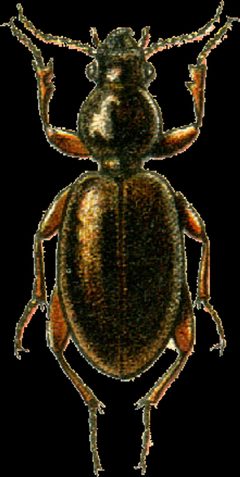
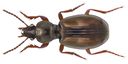
1A of ground beetles (Carabidae) containing only Miscodera arctica. The genus has a circumpolar Arctic distribution with disjunct in northern New England. Its taxonomic placement has been historically disputed, currently assigned to Broscinae though formerly placed in Trechinae.
Pronunciation
How to pronounce Miscodera: //mɪˈskɒdərə//
These audio files are automatically generated. While they are not always 100% accurate, they are a good starting point.
Identification
The single Miscodera arctica can be recognized by its Arctic distribution combined with its placement in the advanced ground beetle lineage. The is distinguished from related Broscinae by its status and circumpolar range; identification to species level requires examination of genitalic and external morphological characters typical of Carabidae .
Images
Habitat
Arctic and subarctic environments; records indicate association with northern and tundra regions. The disjunct New Hampshire and Maine suggest specialized requirements in cool, montane or northern forest settings.
Distribution
Circumpolar Arctic: recorded from Denmark, Norway, Sweden, and Vermont (USA). Disjunct southern outliers in New Hampshire and Maine, USA represent the only known occurrences south of the main Arctic range.
Similar Taxa
More Details
Taxonomic Uncertainty
The phylogenetic position of Miscodera has been debated for over a century. While currently classified in Broscinae based on morphological and molecular evidence, its intermediate characteristics previously led to placement in Trechinae. This uncertainty reflects the challenges of resolving relationships among early-diverging lineages of Carabidae.
Conservation Significance
The disjunct New England , separated from the main Arctic range by approximately 1,500 km, may represent relictual distributions from Pleistocene climatic conditions. These populations are of potential conservation interest due to their geographic isolation and restricted .