
Paraneotermes
Light, 1934
desert dampwood termites
Species Guides
1- Paraneotermes simplicicornis(Desert Dampwood Termite)
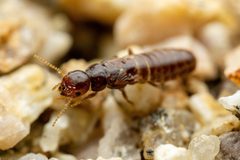
Paraneotermes is a of dampwood termites in the Kalotermitidae, established by Light in 1934. in this genus inhabit arid and semi-arid regions of western North America. The genus includes at least one well-studied species, Paraneotermes simplicicornis, known from the southwestern United States. Members exhibit distinctive collective nest-building , including a unique "kicking" method of soil excavation that differs from other genera.


Pronunciation
How to pronounce Paraneotermes: /ˌpærəˌniːoʊˈtɜːrmiːz/
These audio files are automatically generated. While they are not always 100% accurate, they are a good starting point.
Images
Habitat
Arid and semi-arid environments including drylands and desert regions. Paraneotermes simplicicornis has been observed in association with fallen and decaying Joshua trees (Yucca brevifolia).
Distribution
Western North America, including the southwestern United States. Documented from Arizona (Tempe area) and California (Death Valley region).
Seasonality
and colony founding has been observed following September monsoon rains in Arizona.
Diet
Feeds on decaying wood, specifically observed feeding on rotten and fallen Joshua trees.
Host Associations
- Joshua tree - feeds on decaying woodspecifically fallen and rotten specimens
Life Cycle
Newly mated pairs (colony founders) leave the birth colony following rainfall events, excavate soil to establish new nests. Colony founders are larger than and participate in initial nest construction.
Behavior
Exhibits a distinctive "bucket-brigade" or kicking during soil excavation: individuals at tunnel ends grab sand with their and kick it backward to nestmates behind them, who continue passing material backward. This contrasts with the individual transportation method seen in other . Both and colony founders within the species show the same tunneling behavior, suggesting this is an inherited trait rather than size-dependent.
Ecological Role
Decomposer of dead plant material in arid ; contributes to nutrient cycling by breaking down decaying Joshua tree wood.
Similar Taxa
- Heterotermes aureusBoth are subterranean termites in the southwestern US, but Heterotermes uses individual transportation of soil particles rather than the kicking of Paraneotermes
- Gnathamitermes perplexusAnother desert with overlapping range, but exhibits individual soil transportation rather than the collective kicking of Paraneotermes
More Details
Research significance
Paraneotermes simplicicornis has been the subject of detailed behavioral research by Nobuaki Mizumoto, who documented its unique collective construction . The inherited nature of its tunneling behavior provides insights into the evolution of social insect nest-building.