Lernaea
Linnaeus, 1758
anchor worms
Species Guides
1- Lernaea cyprinacea(anchor worm)
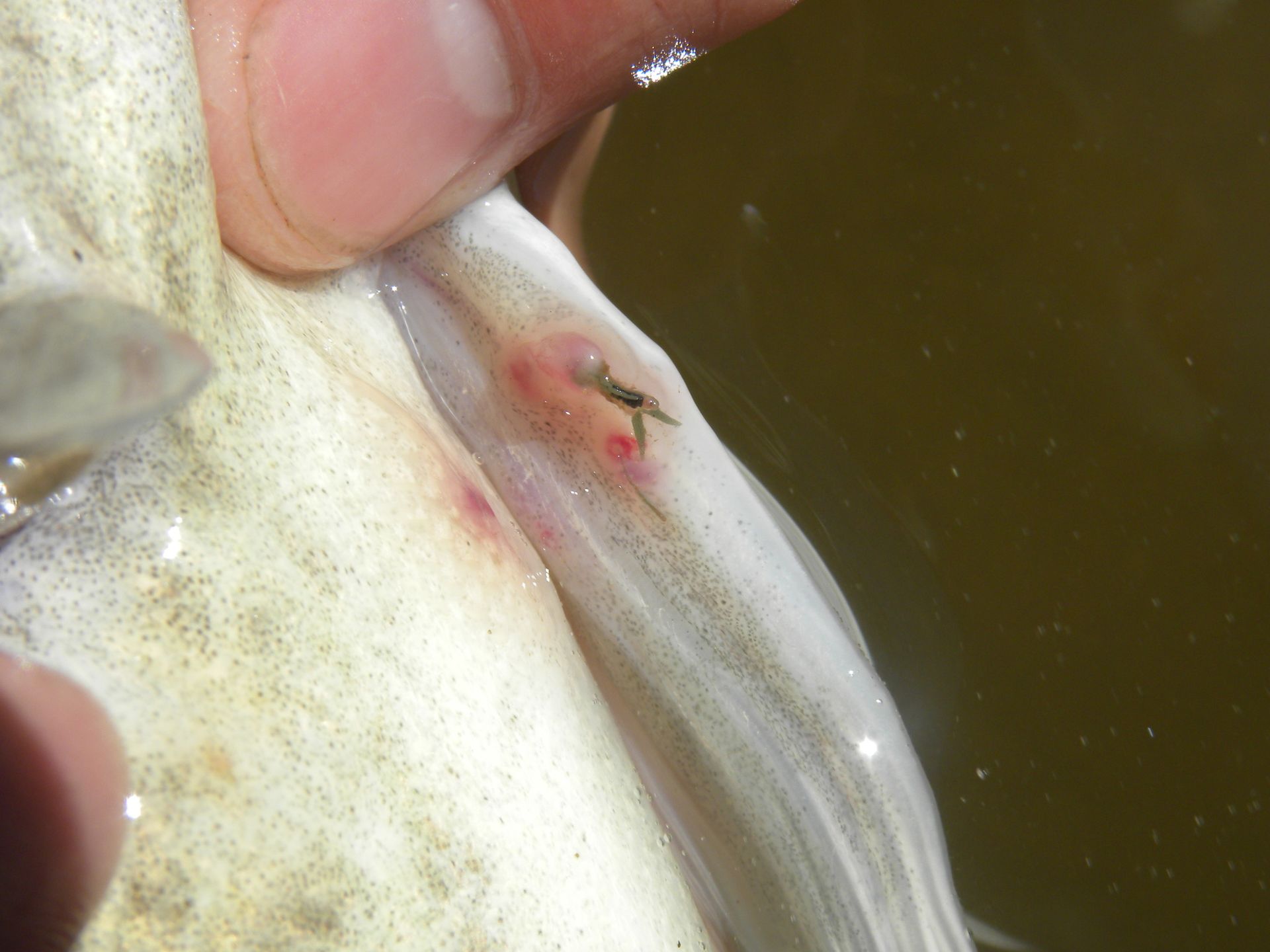
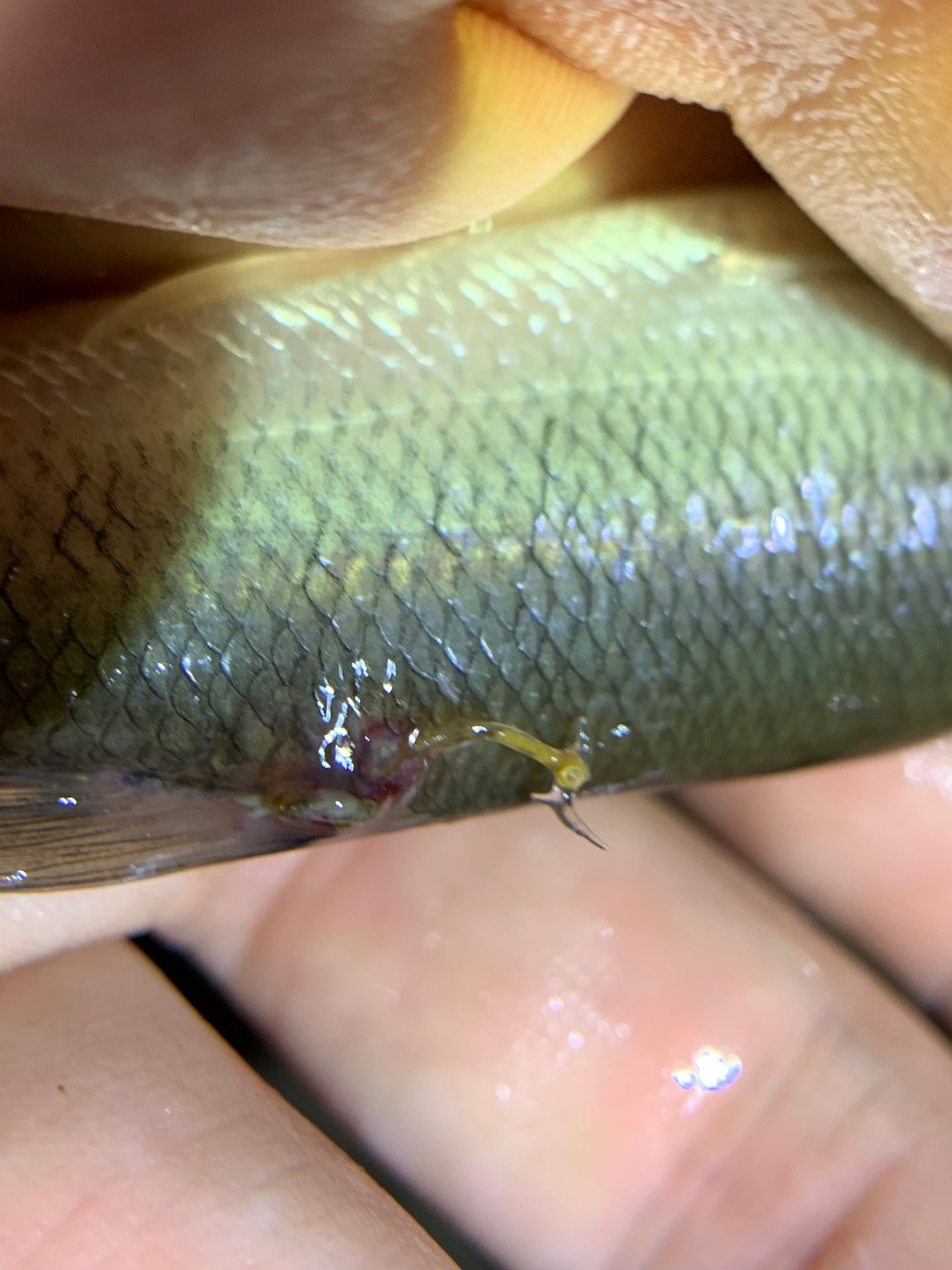
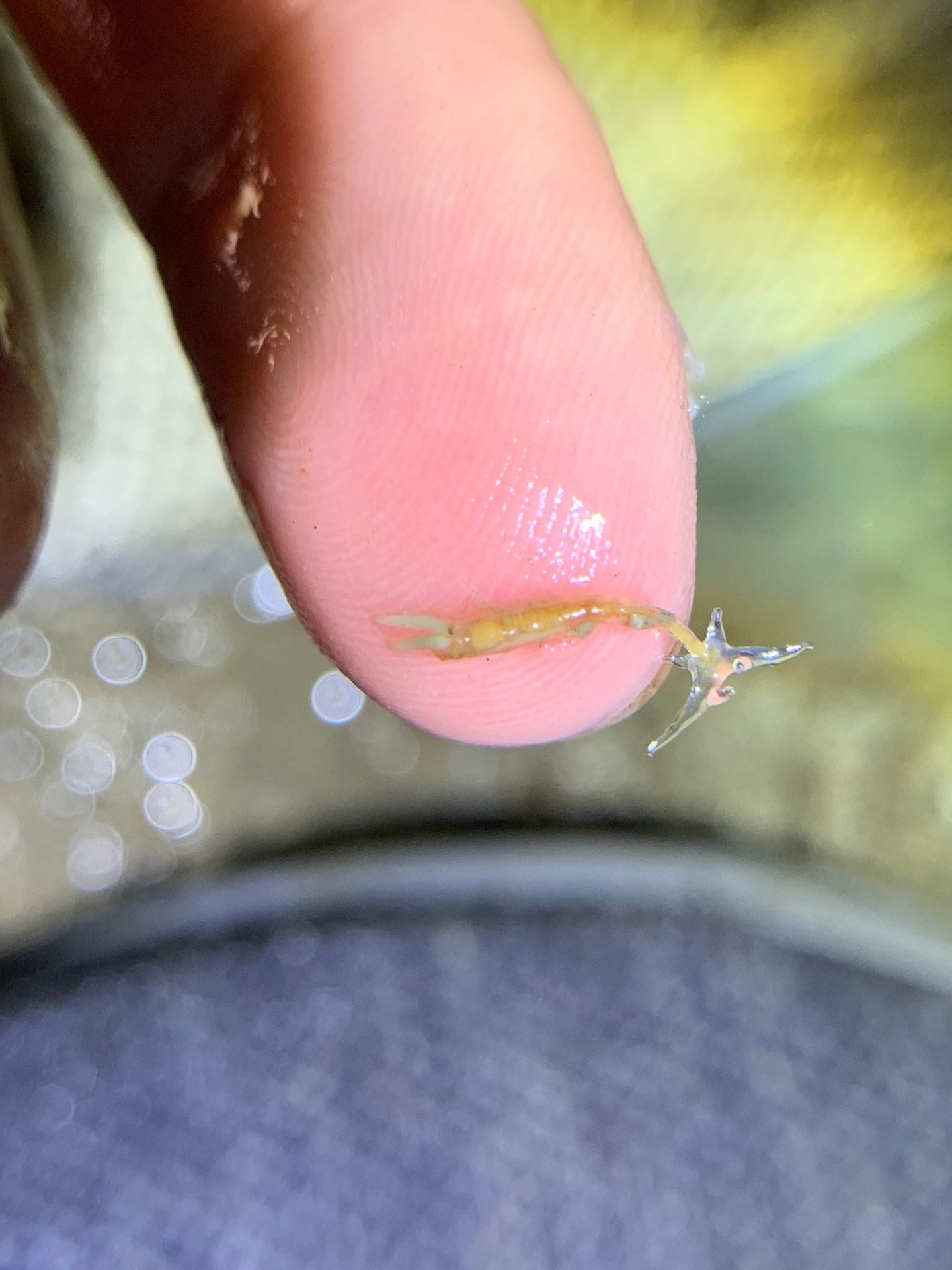
Lernaea is a of parasitic copepod crustaceans commonly called anchor worms, exclusively parasitic on freshwater fishes. Females burrow into fish flesh and transform into unsegmented, wormlike forms with sacs visible externally, while males are free-swimming and short-lived. The genus is widely distributed globally and causes significant in aquaculture and wild fish . Multiple exist, with Lernaea cyprinacea being the most studied and economically important.
Pronunciation
How to pronounce Lernaea: //lɛɹˈniːə//
These audio files are automatically generated. While they are not always 100% accurate, they are a good starting point.
Identification
Visible to the naked as slender, whitish-green to reddish wormlike structures (2–12+ mm) protruding from fish skin, fins, or gills. Females have paired sacs; males are rarely observed as they die within 24 hours after mating. Distinguishable from fish by the anchor-like embedded in tissue and the presence of egg sacs.
Images
Habitat
Freshwater environments including aquaculture ponds, hatcheries, rivers, and lakes. Thrives in warm water conditions above 15°C, with optimal at 26–28°C.
Distribution
Global distribution with records from Asia (Bangladesh, India, China, Japan, Iran), Europe (Denmark, Norway), and the Americas (Patagonia). established outside native ranges.
Seasonality
Peak observed January–March (72% in Bangladesh study); lowest prevalence April–June (8%). Activity and temperature-dependent, ceasing below 15°C.
Diet
/parasitic: females feed on body fluids and tissues of fish .
Host Associations
- Cyprinidae - primary groupmajor carps including Indian and Chinese
- Poeciliidae - Gambusia (mosquitofish) — highest invasion rate (98%)
- Salmonidae - Oncorhynchus mykiss (rainbow trout) — reported in Iran
- Siluridae - shing — lowest invasion rate (13%)
- Osphronemidae - Osphronemus goramy
- Catla catla - Indian major carp
- Anguillidae - Anguilla japonica
Life Cycle
Direct with complete lasting 18–25 days at 26–28°C. Nauplius (3 stages) → copepodid (5 stages, associates with fish gills) → . Mating occurs during final free-swimming copepodid stage. Post-mating: male leaves and dies within 24 hours; female burrows into fish flesh, transforms into unsegmented wormlike form, and remains permanently parasitic. Females release batches producing up to 250 nauplii within 24 hours at temperatures above 25°C.
Behavior
Females exhibit permanent and may move between fish . Copepodids display site selection , initially attaching to gills before females relocate to external body surfaces.
Ecological Role
causing lernaeosis in fish; chronic reduce growth and condition. Attachment sites facilitate secondary bacterial and fungal that can cause host mortality.
Human Relevance
Significant aquaculture pest causing economic losses through fish mortality, reduced growth, and treatment costs. Managed through potassium permanganate baths, salt or formalin dips, manual removal, and modern antiparasitics.
Similar Taxa
- other parasitic copepod genera (Ergasilus, Argulus)Ergasilus spp. attach to gills with visible paired sacs but retain segmented, copepod-like body form; Argulus (fish lice) are flattened, oval, and mobile with suckers rather than embedded anchors
- fish nematodes (Capillaria, Camallanus) are smooth, cylindrical, and lack external sacs or anchor structures; typically found in digestive tract or muscle rather than embedded in skin with protruding tails
More Details
Epizoic associations
Specimens of Lernaea chackoensis have been documented with colonies of the ciliate epizoan Carchesium sp. attached to their external portions, with algal filaments (Oscillaria, Lyngbya, Calothrix) woven through stalks creating a matted covering.
Invasive status
Lernaea cyprinacea is considered in Patagonia and other regions outside its native range, with expanding lists and molecular confirmation of introduced .
Sources and further reading
- BugGuide
- Wikipedia
- GBIF taxonomy match
- iNaturalist taxon
- NCBI Taxonomy
- Catalogue of Life
- Hercules: Hercules beetle, Dynastes tityus — Bug of the Week
- A giant among beetles: Hercules beetle, Dynastes tityus — Bug of the Week
- Biology of anchor worms (Lernaea cyprinacea)
- Ecology and External Morphology of Lernaea cyprinacea
- Host Rejection of Lernaea Cyprinacea L. (Copepoda)
- Molecular and Histopathological study and first report of Lernaea cyprinacea infestation in Oncorhynchus mykiss in the Chaharmahal and Bakhtiari province
- Site Selection On Hosts By Copepodids of Lernaea Cyprinacea L. (Copepoda)
- Lernaea chackoensis n.sp.: a copepod parasitic on two Madras fishes
- The invasive parasitic copepod Lernaea cyprinacea: updated host-list and distribution, molecular identification and infection rates in Patagonia