
Sphaeromatidae
Latreille, 1825
seapills, Typical Seapills
Genus Guides
7- Cassidinidea
- Dynamenella
- Exosphaeroma(Spherical Isopods)
- Gnorimosphaeroma
- Paracerceis
- Sphaeroma(pillbug)
- Thermosphaeroma
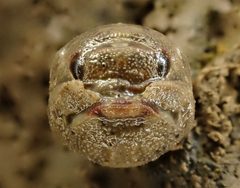
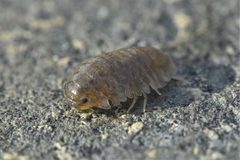
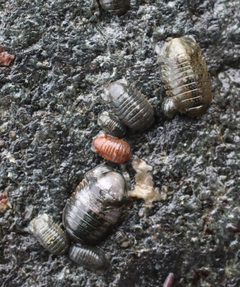
Sphaeromatidae is a of marine isopods commonly known as seapills, containing approximately 100 and 619 marine with about 65 additional species in freshwater. Members are frequently encountered on rocky shores and in shelf waters of temperate zones. Many species exhibit dorsoventrally compressed body shapes, often with vaulted dorsums, though some are strongly flattened and -like. The family includes both free-living and symbiotic forms, with some genera associating with sponges or other marine organisms.
Pronunciation
How to pronounce Sphaeromatidae: /sfɛəˌroʊməˈtaɪdiː/
These audio files are automatically generated. While they are not always 100% accurate, they are a good starting point.
Images
Habitat
Rocky shores and shelf waters in temperate zones; intertidal zones including mussel and barnacle zones; some inhabit sandy beaches, algal , sponge oscula, dead barnacle shells, coral cavities, and rock crevices. Some freshwater species occur.
Distribution
Worldwide in marine environments, with records from temperate zones of the North Atlantic (Denmark, Norway, Sweden), northeastern Pacific, New Zealand, Japan, and the Yucatan Peninsula. Present in both coastal and shelf waters.
Diet
Browsers or detritus feeders. Some have specialized feeding modes: Xynosphaera colemani burrows into alcyonacean coral tissue; general detritivory and browsing on organic matter appears common.
Host Associations
- sponges - Particularly associated with Oxinasphaera
- alcyonacean corals - /feedingXynosphaera colemani burrows into coral tissue
- algae - Juveniles of some live on or amongst
- molluscs - Juveniles sometimes associated with chitons, limpets, and whelks
- demosponges - inhabit oscula of demosponges
Life Cycle
Biphasic observed in at least some : juveniles live on algal cover or in spaces between molluscs and rock surfaces; occupy cryptic and breed in polygynous groups.
Behavior
in armature present in some ; males may possess elongate pleonal processes or horns and large uropods. Adults often maintain -down position in cryptic . Some species form polygynous breeding groups with single males and multiple cohabiting females.
Ecological Role
and browsers in intertidal and shallow marine ; serve as prey for other organisms; some function as associates or of sponges and corals.
Human Relevance
Source of new discoveries in urban environments (e.g., Exosphaeroma pentcheffi discovered at Port of Los Angeles); some species may be useful indicators of marine quality.
Sources and further reading
- BugGuide
- Wikipedia
- GBIF taxonomy match
- iNaturalist taxon
- NCBI Taxonomy
- Catalogue of Life
- Sphaeromatidae Archives - Entomology Today
- Two New Pillbugs Discovered in Los Angeles
- New species of marine roly poly pillbug discovered near Port of Los Angeles | Blog
- Uncategorized | Blog - Part 14
- Habitat utilization by an intertidal isopod, Dynoides dentisinus Shen, 1929 (Isopoda, Sphaeromatidae)
- A new species of Ischyromene Racovitza, 1908 (Sphaeromatidae: Isopoda: Crustacea) from intertidal marine habitats in New Zealand
- First Distribution Record of the Isopod Afrocerceis kenyensis Müller, 1995 (Crustacea: Isopoda: Sphaeromatidae) from Indian Waters
- A new species of the isopod genus Ancinus (Isopoda: Sphaeromatidae) from sandy beaches of the northern Yucatan Peninsula, Mexico.