
Gnorimosphaeroma
Menzies, 1954
Species Guides
2- Gnorimosphaeroma noblei
- Gnorimosphaeroma oregonense(Oregon pill bug)
Gnorimosphaeroma is a of marine and estuarine isopod crustaceans in the Sphaeromatidae. in this genus inhabit intertidal and shallow subtidal environments, with documented occurrences in algal beds, sedge marshes, and wood debris . The genus shows behavioral adaptations for humidity detection and orientation, and includes species with .
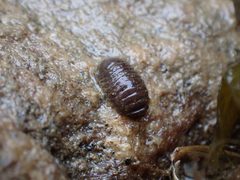
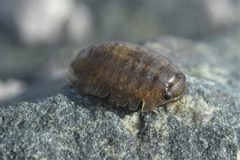
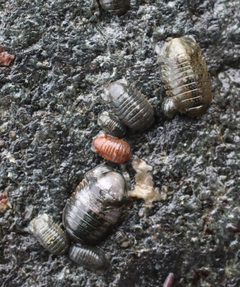
Pronunciation
How to pronounce Gnorimosphaeroma: /ˌnɔːrɪmoʊsfəˈroʊmə/
These audio files are automatically generated. While they are not always 100% accurate, they are a good starting point.
Identification
Members of Gnorimosphaeroma can be distinguished from other sphaeromatid isopods by their characteristic body form and associations. Specific diagnostic features for the require examination of pleotelson and uropod structure, though these traits are not detailed in available sources. The genus is distinguished from related sphaeromatids by the combination of estuarine habitat preference and documented humidity-orientation .
Images
Habitat
Estuarine and intertidal environments. Documented microhabitats include sedge marsh (Carex lyngbyei), algal beds (Fucus distichus), and wood debris. occupy air-exposed microhabitats with high relative humidity and show behavioral orientation to humidity gradients.
Distribution
Northeastern Pacific coast. Documented from British Columbia (Squamish estuary) and the Columbia River Estuary. The likely ranges more broadly along the Pacific coast of North America based on distributions.
Life Cycle
has been documented in Gnorimosphaeroma insulare: males die soon after mating, females soon after release. development time approximately 120 days. Continuous breeding with peak reproductive activity during warmer months; overlapping with year-round recruitment observed in some .
Behavior
Humidity-directed orientation : aggregates in high-humidity areas (76–100% relative humidity) using reversal turn reactions in lower humidity zones and negative hygroorthokinesis. Reduced foraging activity observed under competitive conditions.
Ecological Role
and decomposer in estuarine . Contributes to nutrient cycling through processing of plant material and wood debris. production varies by habitat: highest in algal beds (39.54–48.05 g dry wt·m⁻²·year⁻¹), intermediate in sedge marsh banks (22.97–27.74 g·m⁻²·year⁻¹), lowest in wood debris (4.72–6.43 g·m⁻²·year⁻¹).
Similar Taxa
- Other SphaeromatidaeGnorimosphaeroma is distinguished by its estuarine preference and documented humidity-orientation , whereas many sphaeromatids are strictly marine.
- CorophiumBoth occur in estuarine and have been studied together in limno-ecological contexts, but Corophium is an amphipod with laterally compressed body form versus the dorsoventrally flattened isopod body of Gnorimosphaeroma.
More Details
Competitive Interactions
Laboratory studies show that between Gnorimosphaeroma insulare individuals is stronger than from the New Zealand mud snail Potamopyrgus antipodarum, despite overlap in resource use. The presence of G. insulare reduces foraging in P. antipodarum without affecting snail survival or growth.
Population Dynamics
Growth rates and mortality vary by sex and : males show greater growth and mortality rates than females in all documented habitats. mortality is habitat-dependent, with highest rates in sedge marsh bank habitat and lowest in algal bed habitat. increases linearly with female body size but varies by location.
Sources and further reading
- BugGuide
- Wikipedia
- GBIF taxonomy match
- iNaturalist taxon
- NCBI Taxonomy
- Catalogue of Life
- Humidity behaviour and reception in the sphaeromatid isopod Gnorimosphaeroma oregonensis (Dana)
- Aspects of the Limno-Ecology of Corophium Spinicorne Stimpson (Amphipoda) and Gnorimosphaeroma Oregonensis (Dana) (Isopoda)
- Population characteristics of the estuarine isopod Gnorimosphaeroma insulare in three contrasting habitats: sedge marsh, algal bed, and wood debris
- Coexistence in the intertidal: interactions between the non‐indigenous New Zealand mud snail Potamopyrgus antipodarum and the native estuarine isopod Gnorimosphaeroma insulare