
Porcellionides
Miers, 1878
woodlice
Species Guides
3- Porcellionides floria(Flowery Blue Isopod)
- Porcellionides pruinosus(Powderblues)
- Porcellionides virgatus(Oak Woodlouse)
Porcellionides is a of terrestrial isopods (woodlice) in the Porcellionidae, characterized by distribution and ecological adaptability. within this genus exhibit notable intraspecific variation in reproductive strategies, with some showing seasonal and others continuous breeding activity. The genus has been extensively studied for its , behavioral , and sensitivity to environmental stressors, making it a valuable model organism for soil health assessment.
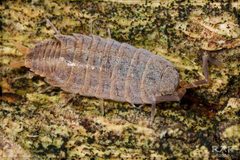
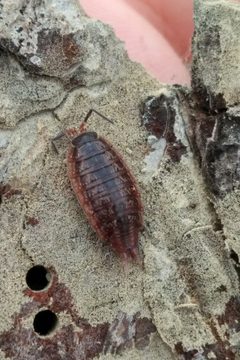
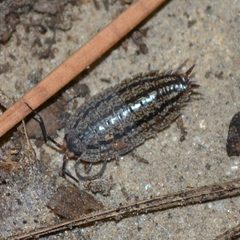
Pronunciation
How to pronounce Porcellionides: /pɔrˈsɛljɔˌnaɪdiːz/
These audio files are automatically generated. While they are not always 100% accurate, they are a good starting point.
Images
Habitat
occur in diverse terrestrial including composts, agricultural fields, and under stones in arid upper bioclimatic zones with cold winters. Specific documented conditions include areas with large daily and temperature variations, annual rainfall 150–500 mm, and elevations around 866 m. show association with nests in desert environments and thrive in semi-arid agricultural .
Distribution
distribution with records from Tunisia (Garat Nâam, Tabarka, Korba, Tamerza, Gafsa, Gabès), Greece (Athens), Iraq (Dhi Qar Province), Israel (Negev Desert), Belarus (Gomel region), Denmark, Norway, Sweden, and the United States (Vermont).
Seasonality
Reproductive activity varies by : seasonal occurs February/March to October/November in some populations (Garat Nâam, Gafsa, Gabès, Athens), while continuous breeding occurs year-round in others (Tabarka, Korba, Tamerza). Juveniles appear April–November in seasonal populations. Population densities peak in spring (March–April) and decline in winter months in studied agricultural .
Life Cycle
Semi- with pattern (two per year) documented in P. sexfasciatus; females produce 2–3 annually. Females can produce multiple broods without remating via sperm storage. Minimum cohort length 3.07–3.47 mm; maximum 10.42 mm. Sexual maturity occurs at approximately 4.8 mm body length.
Behavior
Exhibits trail-following using cues; documented association with Messor ebeninus foraging trails and nests in the Negev Desert. Shows risk-related behavioral plasticity: artificial light at night disrupts repeatability of risk behaviors, causing prolonged freezing responses, increased shelter-seeking, and reduced . Disaggregation behavior used as ecotoxicological endpoint for assessing infochemical disruption. Homing ability demonstrated with return times to trails increasing with displacement distance.
Ecological Role
Potential bioindicator of soil health and stability in disturbed agroecosystems; proposed for monitoring soil alterations.
Human Relevance
Used as model organism in ecotoxicological studies for assessing behavioral endpoints and infochemical disruption. Proposed bioindicator for agricultural soil health in semi-arid regions. New records contribute to regional biodiversity documentation (e.g., first record for Belarus fauna).
Similar Taxa
- Armadillidium vulgareBoth are terrestrial isopods infected by , but Porcellionides shows higher Wolbachia with stronger consanguinity and reduced effective size, whereas Armadillidium maintains higher genetic diversity through lower rates and multiple matings.
- PorcellioBoth in Porcellionidae; Porcellionides distinguished by specific morphological and reproductive trait variations including in pleotelson size and shape.
More Details
Wolbachia Infection
Multiple strains infect P. pruinosus, causing male feminization and female-biased sex ratios. High correlates with elevated inbreeding rates, though instability may also contribute.
Intraspecific Variation
P. pruinosus shows significant phenetic heterogeneity across , with 19 qualitative characters varying among 800 specimens from Tunisia and Greece. Reproductive strategy (seasonal vs. continuous) does not consistently predict population clustering.
Ant Association
First recorded -guest relationship for the : P. pruinosus occurs inside Messor ebeninus nests and along foraging trails at densities up to 60 individuals per 22 m trail, likely exploiting thermal and subterranean food stores.
Sources and further reading
- BugGuide
- Wikipedia
- GBIF taxonomy match
- iNaturalist taxon
- NCBI Taxonomy
- Catalogue of Life
- Biologie et dynamique de population de Porcellionides sexfasciatus (Crustacea, Isopoda, Oniscidea)
- New insights in the Porcellionides pruinosus complex (Isopoda, Oniscidea): biological, behavioural, and morphological approaches
- Prévalences et impact de Wolbachia sur la diversité génétique chez les isopodes terrestres, Armadillidium vulgare et Porcellionides pruinosus
- Iteroparous reproduction, body growth and energy reserves in a tropical population of the isopod, Porcellionides pruinosus
- First record of the terrestrial isopod Porcellionides pruinosus as an ant guest along foraging trails and inside Messor ebeninus nests in the Negev Desert
- Porcellionides pruinosus (Brandt, 1833) – a new woodlouse species (Isopoda: Oniscidea: Porcellionidae) in the fauna of Belarus
- BREEDING BIOLOGY OF THE TERRESTRIAL ISOPOD, PORCELLIONIDES PRUINOSUS (BRANDT, 1833) AT GARAT NÂAM (TUNISIA)
- STRATÉGIE DE REPRODUCTION ET DE CROISSANCE DE DEUX ESPÈCES SYMPATRIQUES DU GENRE PORCELLIONIDES (ISOPODA, ONISCIDEA) DE TUNISIE
- BIOLOGY,POPULATION STRUCTURE, AND FIELD-GROWTH RATES OF PORCELLIONIDES PRUINOSUS (BRANDT, 1833) (ISOPODA, ONISCIDEA) AT GARATNÂAM (KASSERINE, TUNISIA)
- Disaggregation behavior in the terrestrial isopod Porcellionides pruinosus as a new ecotoxicological endpoint for assessing infochemical disrupting activity
- Analyse phénétique des populations de Porcellionides pruinosus (Brandt, 1833) (Crustacea, Isopoda, Oniscidea)
- Artificial light at night alters risk-related behaviors of the ground-dwelling isopod Porcellionides pruinosus
- Wolbachia diversity in the Porcellionides pruinosus complex of species (Crustacea: Oniscidea): evidence for host-dependent patterns of infection
- Feeding behaviour of the terrestrial isopod Porcellionides pruinosus Brandt, 1833 (Crustacea, Isopoda) in response to changes in food quality and contamination
- Morphological Redescription and Monthly Variation in the Population Density of the Terrestrial Isopod Porcellionides pruinosus (Isopoda: Porcellionidae) in Southern Iraq