
Bathynomus
A. Milne-Edwards, 1879
Giant Isopods, Supergiant Isopods, Sea Bugs (Vietnamese: bọ biển)
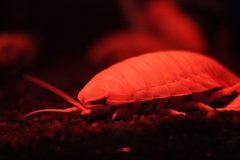
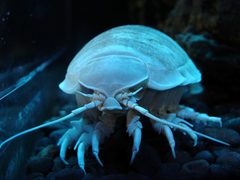
Bathynomus is a of supergiant deep-sea isopods in the Cirolanidae, containing nearly 20 described . These crustaceans are among the largest isopods in the world, with some species exceeding 30 cm in length and 1 kg in weight. They inhabit cold, deep waters of the Atlantic, Pacific, and Indian Oceans, typically at depths of 400–2,300 m. Several species have become commercially fished as seafood, particularly in Vietnam, where they are known as "bọ biển" or "sea ."
Pronunciation
How to pronounce Bathynomus: //ˌbæθɪˈnoʊməs//
These audio files are automatically generated. While they are not always 100% accurate, they are a good starting point.
Images
Habitat
Deep-sea benthic environments, typically at depths between 400 and 2,300 meters. Depth distribution varies by : Bathynomus giganteus occurs at 600–1,000 m (with highest densities at 700–900 m), while B. miyarei is found at shallower depths of 400–600 m. The prefers cold, deep waters of continental slopes and abyssal plains.
Distribution
Atlantic, Pacific, and Indian Oceans. Documented locations include: Gulf of Mexico and Caribbean (B. giganteus); southern Brazil (B. giganteus, B. miyarei); Colombian Caribbean; Vietnam and South China Sea (B. vaderi, B. jamesi, B. paracelensis); southern Java; and Taiwan.
Diet
Scavenging; has been observed to feed on whale falls and other large carrion in the deep sea. Metabolic studies indicate B. doederleini can survive extended periods between meals, with postprandial metabolic elevation lasting up to 20 days after feeding.
Life Cycle
Bathynomus giganteus exhibits year-round reproductive activity. Sexual maturity occurs at 340–345 mm total length for males and 280–290 mm for females in B. giganteus; B. miyarei males mature at 225–230 mm. Estimated longevity is 6 years for male B. giganteus, 7.7 years for female B. giganteus, 9 years for male B. miyarei, and 6 years for female B. miyarei.
Ecological Role
Deep-sea scavengers that contribute to nutrient cycling through consumption of large carrion falls, including whale carcasses. Their low metabolic rates (63% below standard aquatic scaling) reflect to food-limited deep-sea environments.
Human Relevance
Commercially fished as an expensive delicacy in Vietnam, where specimens are sold alive in seafood markets in Hanoi, Hồ Chí Minh City, and Đà Nẵng City. Prior to 2017, they were sold as low-priced bycatch; media attention has since elevated their market value. Also kept in public aquaria, though captive are vulnerable to (documented lethal oomycete in California aquaria). Subject of taxonomic research highlighting deep-sea biodiversity discovery.
Similar Taxa
- CirolanaBoth are cirolanid isopods, but Bathynomus are dramatically larger (supergiant size), strictly deep-sea, and possess distinct morphological features including modified shapes and maxilliped structures.
- Other marine isopod genera (Serolis, Eurydice)Bathynomus is distinguished by its exceptional size, deep-sea , and scavenging versus the generally smaller size and shallower-water habits of most other marine isopods.
Sources and further reading
- BugGuide
- iNaturalist taxon
- NCBI Taxonomy
- Catalogue of Life
- New giant sea bug species named after Darth Vader
- The Sith Lord of the Sea: Supergiant Isopod in the WoRMS’ Top 10 Marine Species of 2025 | Blog
- Reproduction in the Giant Isopod,Bathynomus giganteus
- Biological and ecological traits of Bathynomus giganteus and Bathynomus miyarei (Crustacea: Isopoda): Contribution to the conservation of deep‐sea in southern Brazil
- Lethal, disseminated infection with an oomycete ( Halioticida noduliformans ) in captive, deep-sea isopods ( Bathynomus giganteus and Bathynomus doederleinii ) in California
- Figure 1 from: Huang M-C, Bruce NL (2024) DNA barcoding of the supergiant isopods from Bathynomus kensleyi Lowry & Dempsey, 2006 (Cirolanidae) and a molecular biology comparison of B. jamesi Kou, Chen & Li, 2017. Biodiversity Data Journal 12: e111046. https://doi.org/10.3897/BDJ.12.e111046
- Figure 4: Distribution of Carapace Length (cm) for all individuals separated by sex for Bathynomus giganteus .
- Caracterización biológica del isópodo gigante (<i>Bathynomus giganteus</i>) en aguas profundas del Caribe colombiano Biological characterization of the giant isopod (<i>Bathynomus giganteus</i>) in deep waters of the Colombian Caribbean
- Metabolic responses to food and temperature in deep-sea isopods, Bathynomus doederleini
- A new species of supergiant Bathynomus A. Milne-Edwards, 1879 (Isopoda: Cirolanidae) from the Paracel Islands, South China Sea
- Neural mechanisms governing distribution of cardiac output in an isopod crustacean, Bathynomus doederleini: reflexes controlling the cardioarterial valves
- Bathynomus vaderi Ng, Sidabalok & Nguyen, 2025: the senior synonym of B. paracelensis Huang & Kawai, 2025 (Crustacea, Isopoda, Cirolanidae).
- A new species of supergiant Bathynomus A. Milne-Edwards, 1879 (Crustacea, Isopoda, Cirolanidae) from Vietnam, with notes on the taxonomy of Bathynomusjamesi Kou, Chen & Li, 2017.