Uhlorchestia uhleri
(Shoemaker, 1930)
beach hopper, salt marsh amphipod
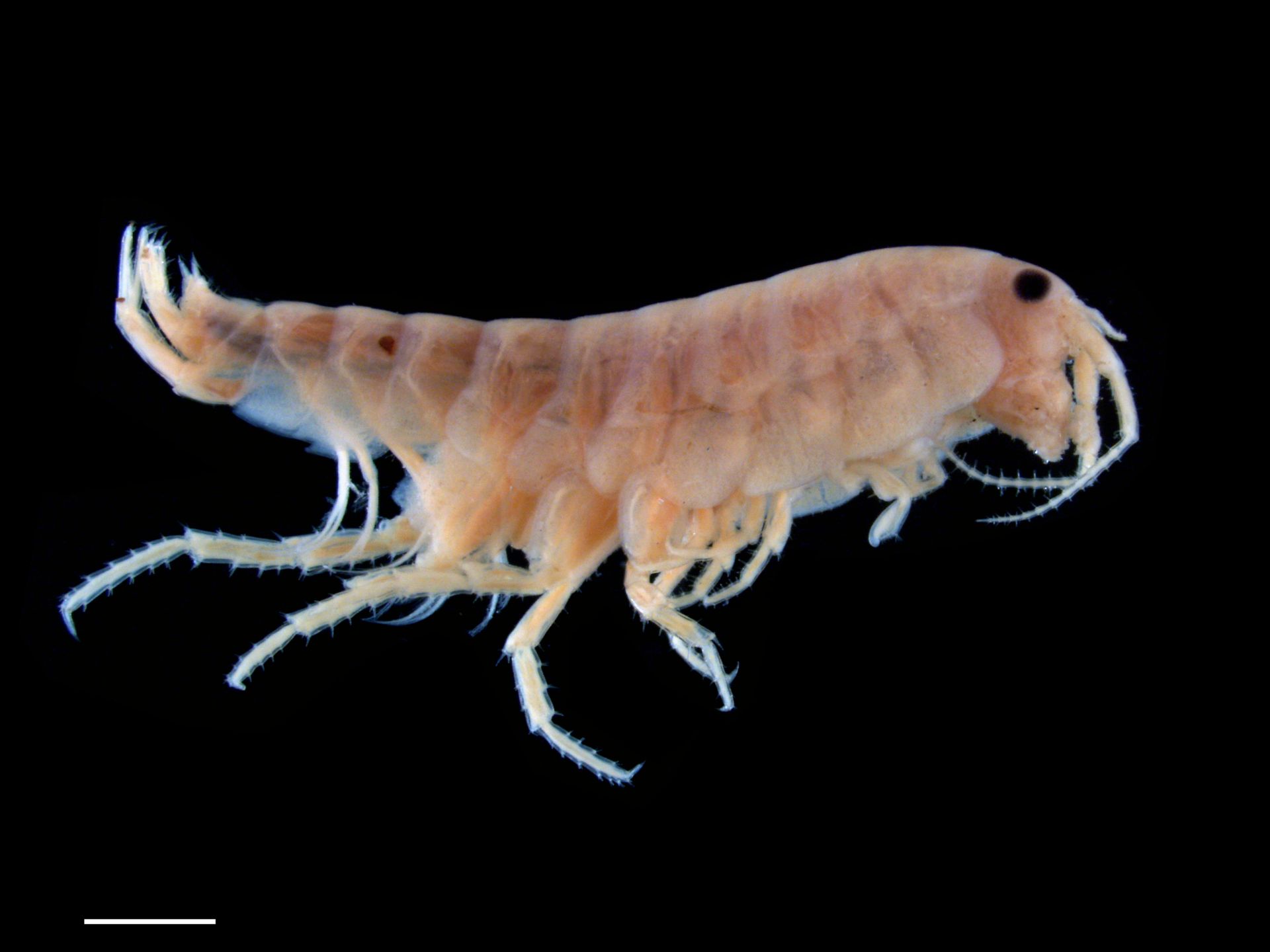
Uhlorchestia uhleri is a talitrid amphipod to salt marshes along the Atlantic coast of North America. This semi-terrestrial crustacean is tightly associated with salt marsh vegetation, particularly Spartina grasses, and exhibits morphological adaptations for life in intertidal environments including reduced gills and modified pleopods. The plays a role as a in salt marsh and serves as prey for marsh .
Pronunciation
How to pronounce Uhlorchestia uhleri: /uːlɔɹ.ˈkɛstiə juː.ˈlɛri/
These audio files are automatically generated. While they are not always 100% accurate, they are a good starting point.
Identification
Distinguished from congeneric by morphological features associated with salt marsh and geographic distribution. Uhlorchestia spartinophila, described from the same region, differs in plant specificity and subtle morphological characters. Separation from other talitrids requires examination of gill reduction and pleopod structure. Identification to species level typically requires reference to original systematic descriptions.
Images
Appearance
Small amphipod with body length typically under 15 mm. Exhibits reduced gills and modified pleopods adapted for semi-terrestrial life in salt marsh environments. Coloration generally cryptic, matching detritus and vegetation of salt marsh . Body laterally compressed typical of amphipods.
Habitat
Salt marshes of the Atlantic coast of North America; specifically associated with salt marsh vegetation in the intertidal zone. Semi-terrestrial, occupying moist but not submerged microhabitats within marsh vegetation.
Distribution
to Atlantic coast of North America; restricted to salt marsh from Massachusetts to Florida. Distribution correlates with availability of suitable salt marsh habitat and vegetation.
Diet
feeding on decaying salt marsh vegetation, particularly material from Spartina .
Host Associations
- Spartina alterniflora - plantPrimary grass in lower marsh zones
- Spartina patens - plant grass in upper marsh zones
- salt marsh grasses - general associationTightly associated with salt marsh vegetation structure
Life Cycle
Complex with multiple stages; development occurs entirely within salt marsh environment. Juveniles occupy same microhabitats as . Females carry in marsupium; breeding occurs within salt marsh .
Behavior
Exhibits strong positive thigmotaxis, maintaining contact with vegetation. Burrows in soft substrates. surface activity pattern. Avoids submersion in tidal waters through behavioral positioning. Shows seasonal vertical within marsh profile, moving to higher ground during high tide events.
Ecological Role
Decomposer and in salt marsh ; contributes to nutrient cycling through breakdown of Spartina detritus. Serves as food source for predatory fish, birds, and within marsh .
Similar Taxa
- Uhlorchestia spartinophilaCongeneric described from same geographic region; differs in plant specificity and subtle morphological characters
- Orchestia speciesOther talitrid amphipods with which it may co-occur; Uhlorchestia distinguished by salt marsh specialization and reduced gill
More Details
Morphological Adaptations
The exhibits reduced gills and modified pleopods, representing adaptations to semi-terrestrial life in periodically inundated salt marsh environments.
Conservation Status
status tied to salt marsh availability; vulnerable to coastal development and marsh degradation.
Sources and further reading
- BugGuide
- Wikipedia
- GBIF taxonomy match
- iNaturalist taxon
- Catalogue of Life
- Publications | Entomology Research Museum
- Systematics, Distributional Ecology, and Some Host-Parasite Relationships of Uhlorchestia uhleri (Shoemaker) and U. spartinophila, New Species (Crustacea: Amphipoda), Endemic to Salt Marshes of the Atlantic Coast of North America
- SYSTEMATICS, DISTRIBUTIONAL ECOLOGY, AND SOME HOST-PARASITE RELATIONSHIPS OF UHLORCHESTIA UHLERI (SHOEMAKER) AND U. SPARTINOPHILA, NEW SPECIES (CRUSTACEA: AMPHIPODA), ENDEMIC TO SALT MARSHES OF THE ATLANTIC COAST OF NORTH AMERICA