
Procambarus clarkii
(Girard, 1852)
red swamp crayfish, Louisiana crawfish, mudbug, red swamp crawfish
Procambarus clarkii is a freshwater crayfish native to northern Mexico and the south-central United States, particularly the Mississippi Basin and Gulf Coast. It is highly adaptable to warm, slow-moving freshwater including marshes, rice paddies, and irrigation systems. The tolerates low dissolved oxygen, moderate salinity, and dry spells up to four months. It has been introduced globally and is a significant pest in Europe, Africa, and Asia, where it outcompetes native crayfish and crayfish . It is also the foundation of a major aquaculture industry, particularly in Louisiana and China.
Pronunciation
How to pronounce Procambarus clarkii: //proʊˈkæmbərəs ˈklɑːrki.aɪ//
These audio files are automatically generated. While they are not always 100% accurate, they are a good starting point.
Identification
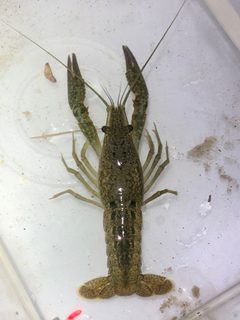
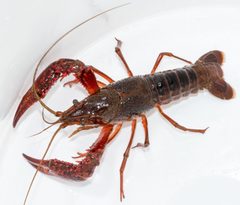
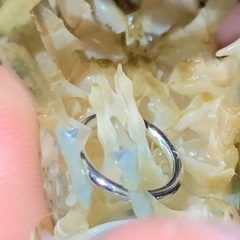
Dark red body with long claws and elongated . sides below head bear small or no spines. Distinctive rows of bright red bumps on front and lateral surfaces of first legs. reach 5.5–12 cm in length and may exceed 50 g. Cave-dwelling in Portugal and Italy show depigmentation (white or blue-white morphs).
Images
Habitat
Warm freshwater bodies including slow-flowing rivers, marshes, , irrigation systems, and rice paddies. Tolerates seasonally wet and can survive dry periods of up to four months by burrowing. Found in karst cave systems in Portugal and Italy where troglomorphic occur.
Distribution
Native to northern Mexico, far southeastern New Mexico, Gulf States to Florida Panhandle, and north through the Mississippi Basin to southern Illinois. Introduced and established in Europe (particularly Mediterranean region), Africa (Kenya, Zambia, Zimbabwe), Asia (China, Thailand, Cambodia), and elsewhere in the Americas. In Europe, are self-maintaining in the north but actively expanding in southern Europe.
Diet
. Consumes macrophytes, detritus, animal matter including fish fry, and artificial feeds in aquaculture. In Chinese aquaculture ponds, juveniles compensate for reduced artificial feed by increasing consumption of natural macrophytes such as Hydrilla verticillata.
Life Cycle
predominant; has been suggested but requires confirmation. In Chinese aquaculture, spawning occurs September–November with mean of 429 per female and two recruitment events. Five growth cohorts identified in commercial . Temperature-dependent embryonic development follows the model D = 3140837(T-2.03)^-3.76, with optimal spawning at 21–25°C and embryonic development at 25°C. Average lifespan approximately five years; maximum recorded age exceeds six years.
Behavior
Constructs burrows that can damage water courses, crops (particularly rice), and civil infrastructure including levees and storm ponds. Capable of overland movement across miles of relatively dry ground during wet seasons. Exhibits compensatory feeding: juveniles increase natural macrophyte consumption when artificial feed is reduced. activity pattern typical of crayfish.
Ecological Role
engineer through burrowing activity. and scavenger that disrupts native . for crayfish fungus (Aphanomyces astaci), crayfish virus vibriosis, and parasitic worms affecting vertebrates. outcompete native European crayfish (Astacus astacus, Austropotamobius spp.) and threaten rare in the Netherlands. Potential threat to stygobitic fauna in cave systems through .
Human Relevance
Major aquaculture : Louisiana produced 90% of global crayfish supply in 1990, though China now dominates world production. Consumed widely in North America, Europe, Africa, Asia, and Australia; central to Louisiana crawfish boils and social culinary traditions. Used as fishing , which has contributed to spread. Sold in pet trade in color morphs (white, blue, orange). Laboratory model for behavioral and physiological research including ethanol studies. Listed on European Union Invasive Species of Union concern since 2016, prohibiting import, transport, and release. Causes economic damage to rice agriculture and artisanal fisheries; individual crayfish may cause fishery losses of $3.62–$6.15 in southern Africa.
Similar Taxa
- Pacifastacus leniusculusSignal crayfish; occurs in sympatry with P. clarkii in some invaded European ranges. Distinguishable by different claw and coloration, and by presence of spines on .
- Cherax quadricarinatusRedclaw crayfish; in same African regions. Consumes more fish tissue (particularly tail, , fins) rather than macrophytes, and targets different parts of fish prey than P. clarkii.
- Astacus astacusEuropean noble crayfish; native displaced by P. clarkii invasion. Lacks the bright red coloration and distinctive bumps of P. clarkii; highly susceptible to crayfish carried by crayfish.
Sources and further reading
- BugGuide
- Wikipedia
- GBIF taxonomy match
- iNaturalist taxon
- NCBI Taxonomy
- Catalogue of Life
- Invasive crayfish can cause high fisheries damage | Blog
- Review of: "Behavioral effects of ethanol in the Red Swamp Crayfish (Procambarus clarkii)"
- Reproductive and feeding ecology of red swamp crayfish procambarus clarkii (Girard, 1852) in China
- Review of: "Behavioral effects of ethanol in the Red Swamp Crayfish (Procambarus clarkii)"
- Review of: "Behavioral effects of ethanol in the Red Swamp Crayfish (Procambarus clarkii)"
- Figure 6: Cephalothorax length (CTL) frequency distribution and growth curves of female Procambarus clarkii during sampling time.
- Figure 7: Cephalothorax length (CTL) frequency distribution and growth curves of male Procambarus clarkii during sampling time.