
Hemerotrecha
Banks, 1903
windscorpion, sun spider, camel spider
Species Guides
5- Hemerotrecha cornuta(windscorpion)
- Hemerotrecha hanfordana
- Hemerotrecha prenticei
- Hemerotrecha sevilleta(windscorpion)
- Hemerotrecha vetteri
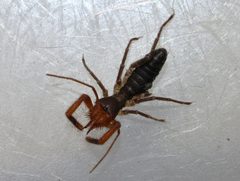
Hemerotrecha is a of solifuges (windscorpions) in the Eremobatidae, first described by Nathan Banks in 1903. The genus comprises more than 30 described distributed in arid regions of North America. These fast-moving, non-venomous arachnids are characterized by their large and lack of silk-producing structures. They are active that hunt primarily at night.
Pronunciation
How to pronounce Hemerotrecha: /ˌhɛmɛroʊˈtrɛkə/
These audio files are automatically generated. While they are not always 100% accurate, they are a good starting point.
Identification
Distinguished from other eremobatid by the structure of the on male and specific tarsal spine configurations. -level identification requires examination of genitalia and cheliceral . The genus is placed in Therobatinae based on these male reproductive structures.
Images
Habitat
Arid and semi-arid environments including deserts, scrublands, and dry grasslands. Found in sandy or loose soil substrates suitable for burrowing.
Distribution
North America, with distributed across the southwestern United States and northern Mexico.
Seasonality
Primarily , with peak surface activity during warm months. Many exhibit seasonal dormancy during extreme temperature periods.
Diet
Active feeding on insects, other arachnids, and small arthropods. Prey is captured using enlarged and macerated with digestive .
Life Cycle
laid in burrows or protected soil cavities. Development includes post-embryonic stages without ; nymphs resemble smaller and undergo multiple before reaching maturity.
Behavior
Fast-running hunters that do not construct webs. Burrows or seeks shelter under rocks and debris during daylight hours. Defensive displays include raising the body and striking with .
Ecological Role
controlling of insects and other arthropods in arid . Serves as prey for larger arthropods, reptiles, birds, and small mammals.
Human Relevance
Occasionally encountered by humans in desert regions; bites are painful but not medically significant due to lack of venom. Subject to exaggerated folklore regarding size and danger.
Similar Taxa
- EremobatesAlso in Eremobatidae; distinguished by differences in male structure and tarsal spine counts
- TherobatesFellow therobatine ; separated by cheliceral and genital structure
Misconceptions
More Details
Taxonomic history
Established by Banks in 1903; placement in Therobatinae reflects modern phylogenetic understanding of Eremobatidae.